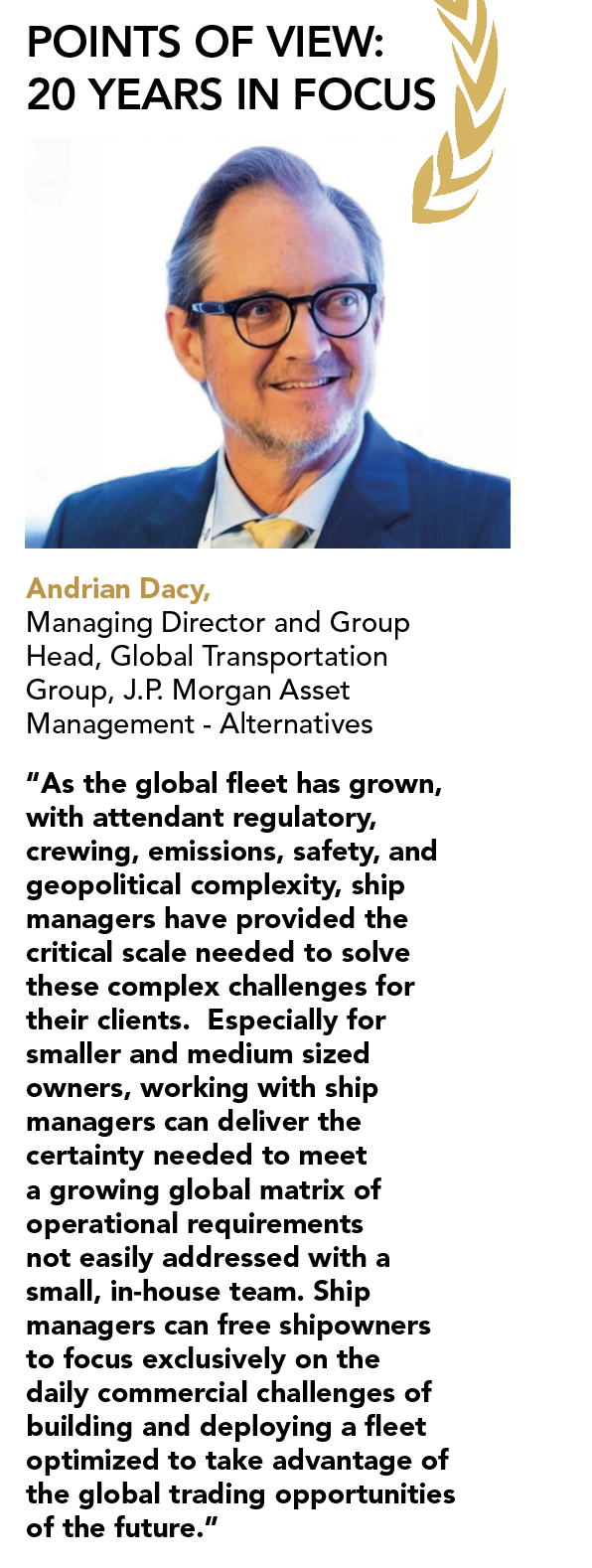
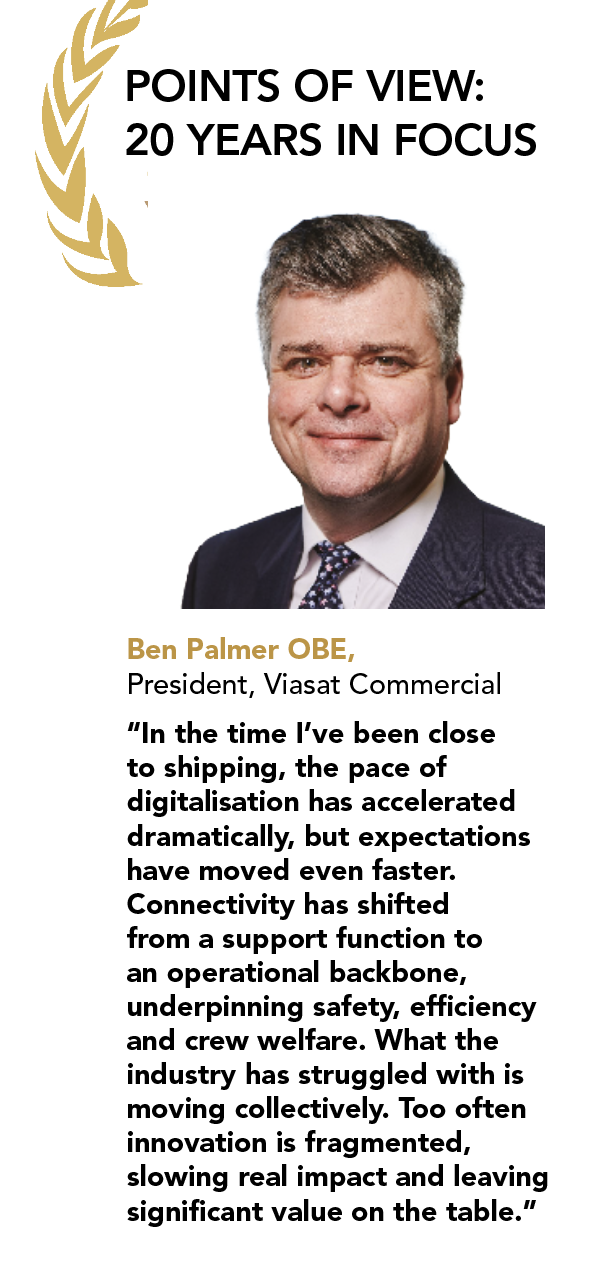
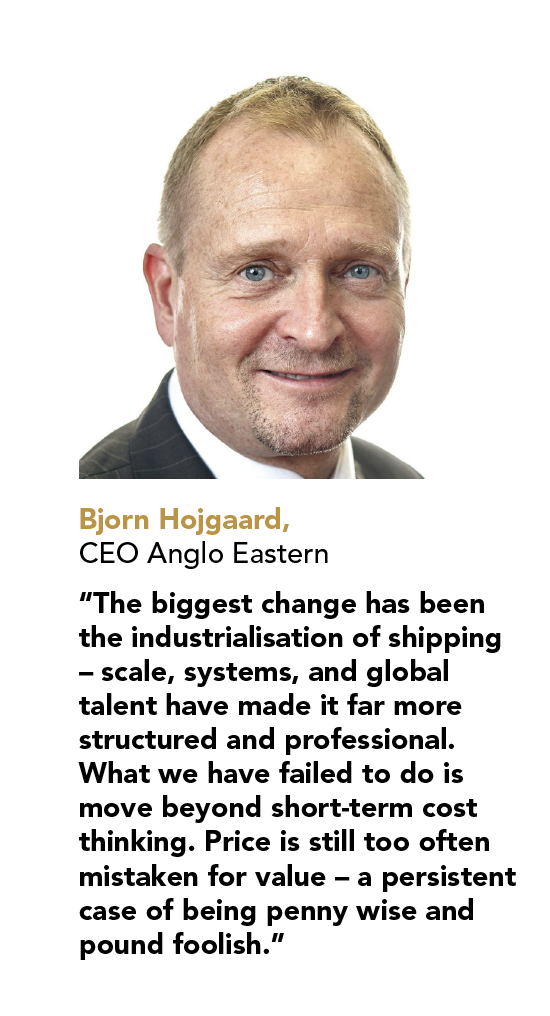
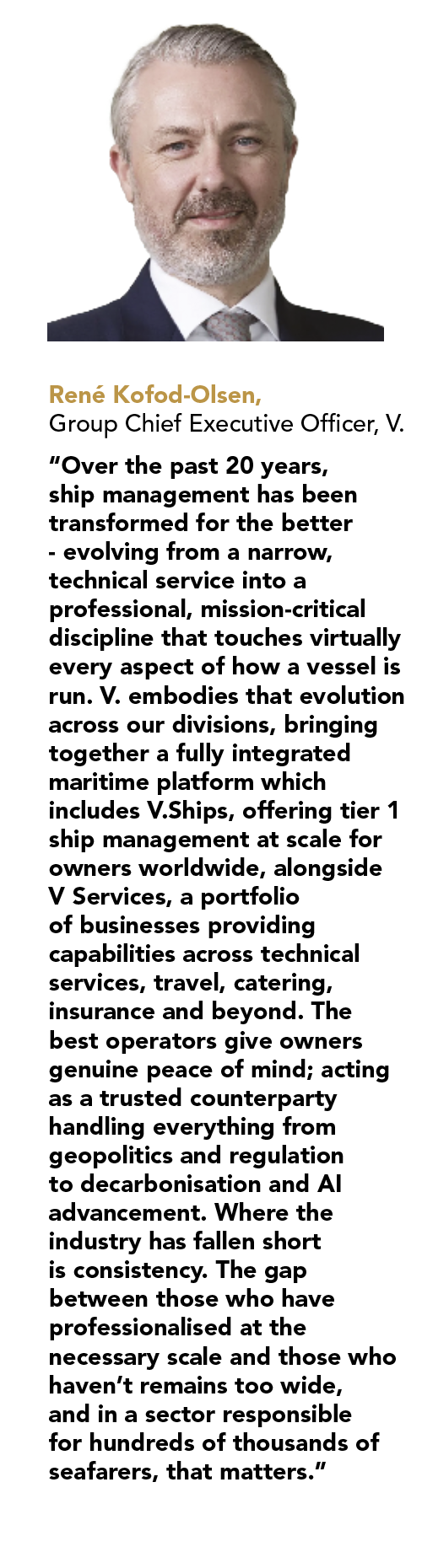
20 years of SMI – Two decades at sea
How shipowning and shipmanagement have navigated 20 years of change
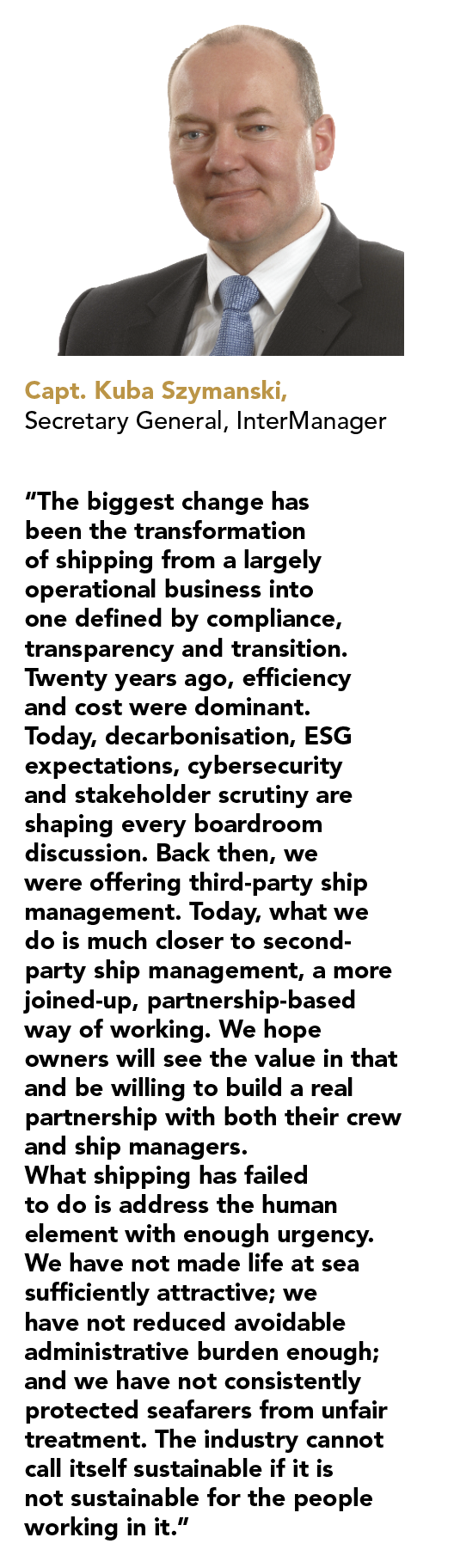
On the occasion of Ship Management International’s 20th anniversary, SMI publisher and founder Sean Moloney looks back at how shipping has changed during that time, inviting leading industry figures to do the same.
When Ship Management International was launched two decades ago, the shipping industry operated largely out of sight and, for the most part, out of mind. It was a sector defined by pragmatism, commercial instinct and a quiet resilience—moving around 90% of global trade with limited public scrutiny. Today, that landscape looks markedly different. Shipping has moved from the margins into the spotlight, shaped by geopolitical shocks, regulatory pressure, technological disruption and growing societal expectations.
Over the past 20 years, shipowning and shipmanagement have not simply adapted—they have been fundamentally reshaped.
Historically, shipping’s low public profile allowed it to operate with a degree of autonomy. That began to change in the early 2000s and accelerated through a series of high-profile events: piracy off Somalia, environmental disasters, supply chain disruptions, and most recently, the global pandemic and Red Sea security concerns.
The COVID-19 crisis, in particular, brought unprecedented attention to the role of seafarers. Crew change restrictions left thousands stranded at sea, exposing the human cost of global trade to a wider audience. Governments, media and the public became more aware of the industry’s reliance on a workforce that often operates under difficult and isolated conditions.
At the same time, incidents such as the ‘Ever Given’ blockage of the Suez Canal and ongoing geopolitical tensions have reinforced shipping’s central role in global supply chains. What was once a largely invisible industry is now regularly part of mainstream economic and political discourse.
Professionalisation of shipmanagement
One of the most significant structural shifts over the past two decades has been the evolution of shipmanagement from a fragmented service offering into a highly professionalised global industry.
Twenty years ago, technical and crew management were often handled in-house by shipowners or outsourced in a relatively informal manner. Today, third-party shipmanagement has matured into a sophisticated sector, with global operators managing large, diverse fleets under increasingly complex regulatory frameworks.
Standards have risen sharply. Compliance is no longer a box-ticking exercise but a core operational function. The introduction and tightening of regulations—from the ISM Code to more recent environmental and safety frameworks—have required shipowners and shipmanagers to invest heavily in systems, training and governance.
This shift has also been driven by the growing expectations of charterers, financiers and insurers. Transparency, accountability and performance benchmarking are now integral to commercial relationships. As a result, shipmanagement companies have had to develop capabilities that extend well beyond traditional technical oversight, encompassing risk management, data analytics, ESG reporting and crew welfare.
In many respects, shipmanagement today resembles other mature industrial service sectors—structured, data-driven and increasingly consolidated.
If there is one theme that has defined the past decade in particular, it is digitalisation. While early efforts were often piecemeal, the industry has gradually recognised that digital transformation is not optional—it is essential.
The initial focus was on operational efficiency: voyage optimisation, fuel monitoring and maintenance planning. Over time, this has expanded into more advanced applications, including predictive analytics, remote inspections and integrated fleet management systems.
Connectivity has been a key enabler. Improved satellite communications have allowed vessels to move from isolated units to fully integrated nodes within a global data network. This has transformed how shipowners and managers monitor performance, manage risk and make decisions.
More recently, attention has turned to data integrity and interoperability. As the volume of data has increased, so too has the need for trusted frameworks to ensure that information can be shared securely and used effectively across stakeholders.
Digitalisation is also beginning to reshape the relationship between ship and shore. Remote support, automated reporting and, in some cases, semi-autonomous operations are reducing the administrative burden on crews while enhancing oversight from shore-based teams.
However, progress has not been uniform. The industry continues to grapple with legacy systems, fragmented standards and a natural caution towards large-scale change. Even so, the direction is clear: digital capability is becoming a defining feature of competitive advantage in shipping.
Decarbonisation agenda
Perhaps the most profound challenge facing shipowning and shipmanagement today is the transition to alternative fuels and the broader decarbonisation agenda.
Twenty years ago, environmental regulation was a growing consideration but not a central strategic issue. Today, it sits at the heart of decision-making. The International Maritime Organization’s targets for reducing greenhouse gas emissions, coupled with regional measures such as the EU Emissions Trading System, are driving a fundamental reassessment of how ships are designed, fuelled and operated.
The shift from conventional fuels to alternatives such as LNG, methanol, ammonia and, potentially, hydrogen represents a step change in complexity. Each option brings its own technical, commercial and safety challenges. For shipowners, the question is not just which fuel to choose, but when to invest and how to manage the risk of technological obsolescence.
For shipmanagers, the implications are equally significant. Managing vessels powered by new fuels requires new skills, new procedures and new safety frameworks. Training and competency development have become critical, particularly as crews are asked to operate increasingly complex systems.
At the same time, operational measures—such as speed optimisation, route planning and energy efficiency technologies—continue to play an important role. The decarbonisation journey is not a single leap, but a series of incremental steps supported by both technology and operational discipline.
What is clear is that the energy transition is no longer a compliance issue. It is a strategic imperative that will shape the industry for decades to come.
Amid all the technological and regulatory change, the welfare of seafarers remains one of the most pressing—and unresolved—issues.
Over the past 20 years, there have been genuine improvements. Greater attention has been paid to training, safety standards and onboard conditions. Connectivity has improved, allowing seafarers to stay in touch with families and access support services.
Yet significant challenges persist. Long contracts, isolation, fatigue and mental health pressures continue to affect large parts of the workforce. The pandemic highlighted how vulnerable seafarers can be to external shocks, with many left stranded due to travel restrictions and administrative barriers.
There is also an ongoing tension between efficiency and welfare. As ships become more technologically advanced and operationally optimised, crew sizes have not necessarily increased to match the complexity of onboard systems. In some cases, the burden on individuals has grown.
The industry has recognised these issues, and there are numerous initiatives aimed at improving welfare, from enhanced communication systems to mental health support programmes. However, progress has been uneven, and the gap between aspiration and reality remains.
If shipping is to sustain its licence to operate—particularly in a more visible and scrutinised environment—addressing seafarer welfare will be critical.
Looking ahead
The past 20 years have seen shipowning and shipmanagement move from a relatively insular, operationally focused industry to one that is increasingly visible, regulated and strategically complex.
Digitalisation is redefining how ships are managed and how decisions are made. The energy transition is reshaping investment and operational strategies. Professionalisation has elevated standards across the board. And through it all, the human element—embodied by the seafarer—remains central.
As Ship Management International marks its 20th anniversary, the industry it has chronicled stands at another point of inflection. The pace of change is unlikely to slow. If anything, the next two decades promise to be even more transformative.
The challenge for shipowners and shipmanagers will be to navigate this complexity while maintaining the resilience and adaptability that have long defined the sector. The stakes are higher, the scrutiny greater—but so too are the opportunities for those able to evolve.