
Registries – Challenges for flags keep on multiplying
Even before the Iran war, the world’s ship registries were already knee deep in compliance, regulatory, due diligence and admin demands. These related to constantly changing sanctions, the growing threat of the shadow fleet and allied instances of seafarer abandonment, the proliferation of false flags, AIS/GPS jamming and spoofing, fraudulent documentation… to name just a few.
The conflict in the Middle East has turned the dial to max when it comes to ongoing and new challenges. Quite apart from the huge concerns around the safety and wellbeing of thousands of seafarers stranded onboard vessels unable to transit the Strait of Hormuz, the crisis has added new dimensions to the problems that were already there.
Trump’s waiver on Russian oil added confusion around US and other sanctions regimes, already complex enough. AIS spoofing and jamming has gone crazy. Under Iran’s selective blocking of the Strait of Hormuz, many vessels of questionable status from the shadow (or ‘dark’, ‘grey’ or ‘parallel’ – take your pick) fleet have had the privilege of passing through the Strait, while other legitimate, compliant vessels have not; the US Navy’s subsequent blockade of Iranian ports has merely complicated matters further.
Ship registries must make sense of conflicting information, contradictory news, fantastical AIS tracking reports and Trump’s sanctions policy whims. Every piece of information must be checked and double checked.
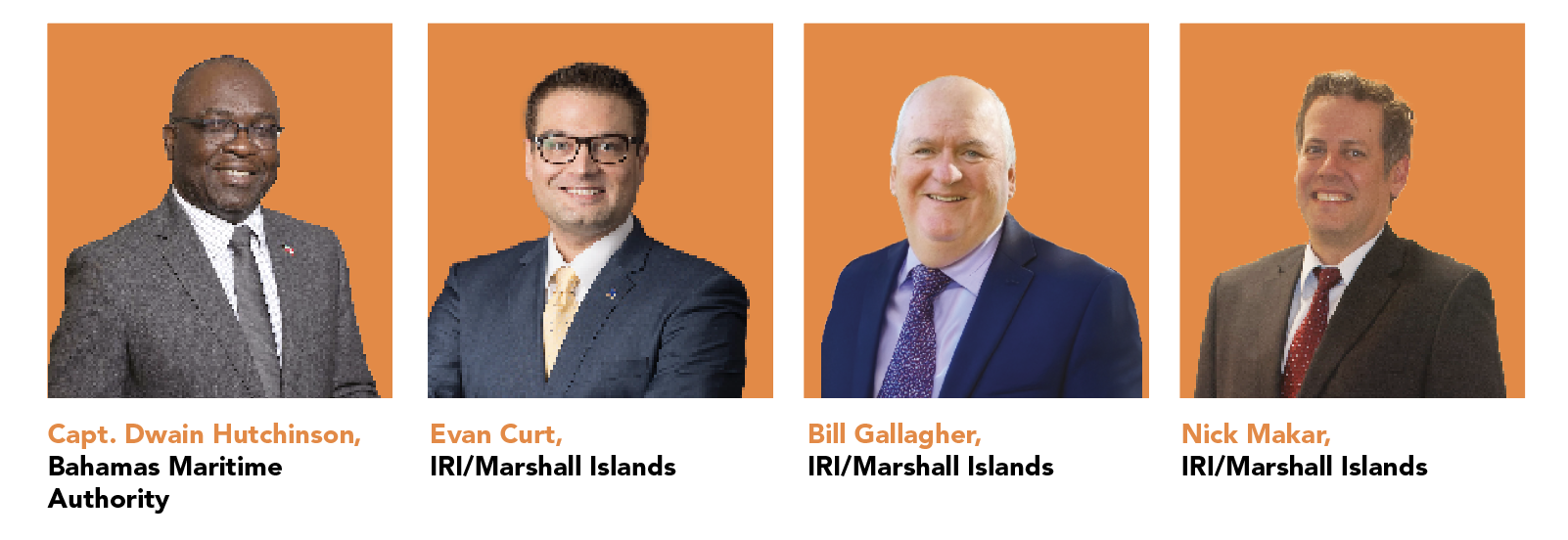
Capt. Dwain Hutchinson, Managing Director and CEO of the Bahamas Maritime Authority (BMA), said: “There is concern in the industry that there is a lot of false information out there. Make sure you validate and verify everything before you share it out.”
He says the BMA position towards the ‘non-compliant fleet’ remains the same: track vessels, pick up any potential non-compliance, escalate, investigate and, if any non-compliance is confirmed, take corrective action. “In some cases, the only action may be that we request that the ship leaves the registry.”
However, he said flag states could not get involved in every single cargo transaction, commercial operation and practice of every ship. “Our expectation is that the managers will take in the requirements of port and coastal state where they operate and follow those requirements – and, if they breach those requirements, this would be reported to us. That is where collaboration of member states is so critical.”
Widespread AIS spoofing and jamming is compounding the difficulties, said Hutchinson. “Everyone can see the benefits of technology: enhanced processes, more economic and environmentally friendly. But with the advances of technology come challenges of negative use of that technology. If we had a ship that apparently travelled the equivalent of five days in one day, we would undertake an investigation. Spoofing or mirroring of AIS equipment is a problem the industry is facing.”
Ships are allowed to turn off AIS if it is deemed to be a risk to the ship. “We make allowance for safety and security risks. However, while AIS can be turned off under SOLAS, there is a mandatory requirement on Long-Range Identification and Tracking (LRIT). ; we say they cannot turn it off. We can increase the reporting frequency of LRIT, and we have done that without having to go back to the owners or managers.”
This delivered interesting stats in the Persian Gulf. “When the conflict first started, we had about 28 ships based on our tracking within the region. This dropped to just under 15 within two days when you looked at AIS – but the LRIT numbers matched what we knew. So we did have a good idea of the ships in there.”
Ship registries have to learn the new sanctions regulations as they evolve, said Evan Curt, VP Maritime Security at IRI, managers of the Marshall Islands Registry. “Sanctions compliance has become more confusing and difficult because a lot of what was previously sanctioned is now legally permitted to trade – including waivers on Venezuelan, Iranian and Russian oil. We still have to check whether a ship has a licence to go to Venezuela. It’s not like a free pass – you still have to check.”
If a ship is found to be carrying sanctioned oil, the Marshall Islands acts on a case-by-case basis, he said. “The legal department will go to the operator and ask for their side of the story, give them the evidence we have and see what they have to say. If they don’t have an excuse, we have a right to strike them off.”
In fact, the Marshall Islands hasn’t had to deal with a sanctioned vessel in well over a year – Bill Gallagher, IRI President, said: “When you have a very compliant fleet on the technical side of things, they tend not to be the kind of vessels that end up doing nefarious trades.” However, he said: “Our biggest exposure is on the corporate side. The Marshall Islands is a very well-known corporate jurisdiction for the maritime community.”
It’s a case of ‘pull on the string and find more degrees of connectivity’, according to IRI, which has expanded its legal and trade compliance teams again recently, and has designated compliance specialists in its regional offices as well as HQ.
There were 185 Marshall Islands flagged vessels stuck beyond the Strait of Hormuz towards the end of March. About 60 of these were anchor handlers, tugs and the like, but the biggest concern was for a similar number of tankers and gas carriers, said Evan Curt, who said conflicting advice doesn’t help. Naval advice might be that vessels should keep moving – ‘don’t be a sitting duck’ – but that gets difficult when a ship is at anchor and the port state might want it to stay put for safety reasons.
IRI reported a high level of AIS interference. Mid-March, AIS tracking showed a vessel that had been sent for scrapping was heading through the Gulf. “There is AIS hijacking where people are taking ghost vessels and using their identity. It is very rare, but we have to figure out how they are doing it and hopefully we can act.”
Much of the AIS jamming in the Gulf is due to anti-missile systems that jam signals, he said. However, there have been cases of ships tracked across the middle of the desert. “This is all very concerning for navigation – it’s a huge safety issue.”
He also warned that any electronic emissions from a ship could help nefarious actors to track a vessel – and that could include seafarers’ mobile phones. “We are advising seafarers to shut that off.”
The Marshall Islands Registry is concerned about the emergence of false flags and/or mismanaged registries and Nick Makar, IRI’s Senior Vice President, Maritime Administration and Regulatory Affairs, said: “The agendas at the IMO legal committee are dealing with this and I would like to see the work at IMO progress on that. We want to see the development of best practice on registration, due diligence, etc., but ultimately it comes down to those administrations which have established flags ensuring they are appropriately resourced to execute their responsibilities.
“When it comes to bad actors and those intentionally falsifying documents, web pages, etc., that’s a much bigger issue.”
Here, the IMO’s GISIS (Global Integrated Shipping Information System) is vital for sharing information on the registration status of ships, including ships that have been thrown off a registry, and on false flagging, said Curt. “When a sketchy ship leaves one registry, it goes on this database, and all the registries can see this and know not to reflag it. However, not every flag is on this system, so it’s still an issue.”
As Gallagher pointed out, care is needed before deciding a ship is ‘flag-hopping’ for suspect reasons. “Ships do change flags mid-ocean legitimately from time to time,” he said. Makar added: “We have to be mindful of not overriding or preventing legitimate transactions. It’s the same with ship-to-ship transfers – it’s a fine balance, enabling legitimate processes to take place while trying to address those that are not legitimate but could appear to be.”
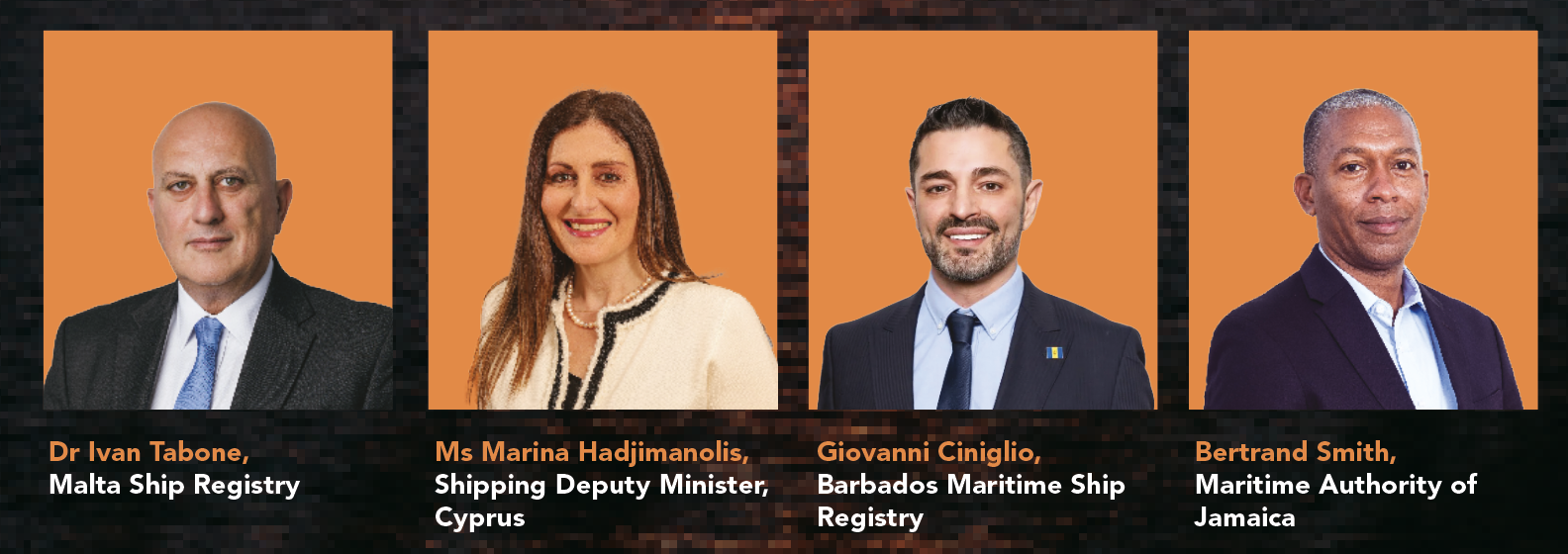
Tackling the shadow fleet and other substandard ships should be a strategic priority, as these vessels pose systemic risks to environmental protection, maritime safety and the integrity of global trade, said Dr Ivan Tabone, Registrar General of Shipping and Seamen at the Malta Ship Registry. “Shadow fleet vessels are typically defined by their age, substandard maintenance, questionable insurance and registration in jurisdictions with lax oversight, all designed to bypass legally enacted sanctions.
“As the EU’s largest ship registry and a top-tier global flag, Malta maintains a zero-tolerance policy towards any activity that undermines international law or maritime safety. The Malta Ship Registry is not merely a ship registry but a rigorous regulator. Our policy is uncompromising: we ensure all vessels flying the Maltese flag adhere strictly to legally enacted international sanctions. By leveraging risk analysis tools and collaborating closely with the Sanctions Monitoring Board and other international partners, we proactively seek to deter and stop deceptive maritime practices.”
Tabone said that because of its ‘stringent gatekeeping measures’, Malta has not had cause to deregister vessels for sanctions breaches to date, but if it received evidence of a breach or failure to maintain international safety standards, it would move decisively to revoke registration.
Identifying shadow activities is an evolving challenge because of complex ownership structures and frequent name changes but Malta, with its partners, has the technical capability to trace beneficial ownership and spot suspicious trade patterns, said Tabone. “It is important to distinguish these from vessels operating under legitimate sanctions exemptions with the requisite documentary evidence; those adhering to the rule of the law are not considered part of the shadow fleet.”
Malta is highly vigilant regarding AIS ‘dark’ periods and GPS spoofing, he added. “We treat any unauthorised AIS deactivation as a significant red flag. Our monitoring teams scrutinise these gaps; if a lack of transmission is not justified by immediate safety or security concerns, it triggers an immediate investigation.”
Tabone described the rise of false flags as a direct threat to safety of life at sea and the environment. “While a comprehensive framework of IMO instruments exists, the solution lies in more robust implementation and transparency. Malta advocates for a unified, global digital verification system. We have already led by example, transitioning to fully digital, tamper-proof certification with QR code authentication, allowing any port state to instantly verify a vessel’s legitimacy. We want to see increased international cooperation to blacklist fraudulent registries and ensure rogue vessels are denied access to global ports.”
Cyprus deleted a number of vessels from its ship registry when the EU first adopted restrictive measures against Russia, but there have been no reported cases of Cyprus-flagged vessels failing to comply with the measures, said Marina Hadjimanolis, Cyprus Shipping Deputy Minister. “Continuous monitoring, due diligence on the ship registration level, high safety and ship registration standards, close communication with shipowners and managers and the issuance of official guidance through sanctions information notices and circulars contribute to maintaining this high level of compliance,” she said.
While AIS or GPS interference has been reported internationally as part of sanctions evasion practices, no confirmed cases have involved Cyprus-flagged vessels, said Hadjimanolis. “The Cyprus Ship Registry remains vigilant, particularly given the growing concern around shadow fleet activities, and continues to ensure that vessels flying the Cyprus flag operate with transparency, safety and full compliance with international regulations.”
Hadjimanolis described the proliferation of false flags or fraudulent registrations as “a matter of serious concern for the international maritime community”.
“These practices destabilise the integrity of the global regulatory framework, distort fair competition and, most importantly, pose significant risks to safety, security and environmental protection.”
Fraudulent registration and registries undermine the fundamental rights granted under international law to authorised flag administrations to lawfully grant the nationality to ships on their registers, she added. “Furthermore, they have an adverse impact on the global economy, which greatly relies on international shipping, as well as a negative effect on the safety of navigation, and creating a negative image of the shipping industry.”
Hadjimanolis said the issue highlighted the urgent need for stronger international cooperation and transparency. “We support enhanced verification mechanisms within global systems, particularly through closer collaboration between flag states, port states and international organisations,” she said. “Digitalisation and better data-sharing tools can play a key role in preventing fraudulent registrations.”
Timely and unimpeded information exchange is vital and the GISIS is an important platform for this, Hadjimanolis added.
Calling for ‘severe and internationally unified’ disciplinary measures she added: “We would also encourage stricter enforcement actions against entities facilitating such practices. Ultimately, safeguarding the credibility of legitimate flags requires a collective and coordinated response at the global level.”
Giovanni Ciniglio, CEO and Principal Registrar at the Barbados Maritime Ship Registry (BMSR), said that if a vessel becomes sanctioned while flying the Barbados flag, it is deleted from the registry and an administrative penalty of US$25,000 is applied.
“Sanctions regimes are established at national or regional level rather than universally,” he emphasised. “Barbados cooperates with partner jurisdictions and monitors relevant sanctions lists. In recent years, the BMSR has deregistered vessels when they become subject to sanctions while flying the Barbados flag, but such cases have been relatively limited.”
Monitoring vessel activity globally is complex, said Ciniglio. “Flag states rely on a combination of open-source maritime intelligence, information from specialised service providers, and cooperation with other administrations and authorities.”
He said AIS interference was an increasing concern in several regions, and determining the actual location and trading patterns of vessels involved in such practices requires specialised intelligence capabilities.
Ciniglio also warned that fraudulent ship registration was not limited to so-called fake flags. “In some cases, shipowners or intermediaries attempt to operate vessels using forged certificates from legitimate registries.”
Despite the pressure the shipping sector faces from geopolitical uncertainty, illicit activities and environmental requirements, there is clear opportunity where the industry continues to invest in technology, people and cooperation, Bertrand Smith, Director General of the Maritime Authority of Jamaica (MAJ), said recently.
He was speaking as the MAJ said that paper-based processes were no longer fit for purpose in modern maritime operations – warning that outdated practices increasingly pose operational and safety risks in 2026.
The authority said it expects operators to be able to demonstrate how digital systems, cyber resilience and crew training are being addressed as part of day-to-day operations, as reliance on manual processes continues to fall away across the sector.
Jamaica is committed to international regulations and good practices in ship registration and is firmly against the practice of vessels breaking sanctions and not abiding by international regulations, Smith told SMI. “Relevant agencies of government and the MAJ/JSR are required to ensure that all Jamaican ships, and all foreign ships calling at Jamaica ports, are compliant with applicable international conventions and regulations. Consequently, vessels are only considered for registration where such vessels do not appear on the list of sanctioned vessels published by the UN or OFAC or other sanctions lists applicable to Jamaica.”
Although not a frequent occurrence, Jamaica has deleted vessels found to be in violation of international sanctions, Smith said. A recent case involved a vessel that did not have a history of violations at the time of registration.
Jamaica relies upon industry resources to identify vessels and, to this extent, does not have a difficulty with identifying where vessels are and the particular trade in which they are involved, said the MAJ Director General. “The location of a vessel may be tracked by the vessel’s (LRIT) system, which is constantly monitored on an international platform by service providers approved by the sector, and AIS for vessels near-shore (Jamaican waters).
“The shadow/dark fleet, and vessels otherwise engaged in illicit activities, would typically turn their equipment off. Locating vessels in such instances may therefore be challenging. Without satellite assistance, it is not possible to know what a vessel is doing at an instant in time – and more so, where the vessel engages in activities offshore.”
The proliferation of illicit activity of any form is usually an indication of perceived opportunities of high risk, in respect of which restrictions apply, Smith points out. “Shipping is no different. This issue of a larger number of false flags also raises concerns in respect of the threat to the marine environment and welfare of seafarers, who may not be fully aware of the nature of the operation. The international framework for the regulation and administration of ships and shipping must be assertive, and states should be encouraged to develop and maintain an environment of collective global responsibility. Rogue states and individuals/entities must be encouraged to voluntarily comply and otherwise be heavily sanctioned such that the incentive for selfish gain becomes unappealing.”
Abandonment – A cause for concern
The rise in the number of cases of seafarer abandonment is a serious concern, with such situations violating the essential rights of seafarers, according to Cyprus Shipping Deputy Minister Marina Hadjimanolis. “The welfare and protection of seafarers should always be a priority in the maritime industry,” she said. “The phenomenon is particularly worrying when linked to vessels operating within the so-called shadow fleets, where regulatory oversight may be limited or unclear.”
Cyprus has a robust policy framework in place to prevent and address any cases of seafarer abandonment, said Hadjimanolis. It is also calling for stronger international coordination, improved compliance with measures to tackle the issue, and increased speed and quality of cooperation between flag states, port authorities and other stakeholders in terms of providing assistance to abandoned crew.
“Cyprus has encountered a limited number of cases over time, reflecting the high standards and strict oversight of our registry,” she added. “Each situation is handled with urgency and the utmost seriousness to ensure that affected seafarers receive immediate support.”
Seafarer abandonment is a “humanitarian crisis and a stain on the maritime industry”, said Dr Ivan Tabone at the Malta Ship Registry. “Malta views this with the utmost gravity. There is a link between illicit shipping activities and abandonment; operators who circumvent legal sanctions are often the same ones who disregard the human element.”
Malta believes that seafarer welfare is inseparable from ship safety, and that any entity ignoring the wellbeing of its crew “cannot be recognised as a serious maritime player”. The Maritime Authority of Jamaica described seafarer abandonment linked to the shadow fleet as ‘of grave concern’ but also emphasised that seafarers have a responsibility to scrutinise properly offers of employment and the terms that apply.
“Seafarer supplying nations also have an obligation to sensitise seafarers to the rising dangers of the shadow fleet and highlight the risks of abandonment. The shadow fleet would appeal to the appetite for ‘good pay’ because of the risk associated. Seafarers have a responsibility to themselves, their families and their countries to seek after their welfare and protect their interests; all that glitters is not gold.
“A seafarer who knowingly joins a vessel operating illegally is complicit in the illegal activity and must bear the consequences. Where seafarers do not knowingly accept employment in the ‘shadow fleet’, the global framework of support must provide them necessary assistance to leave the environment.”
Crewing agencies and seafarers are encouraged to verify the legitimacy of offers and operations with which they seek to become involved, said the MAJ. “They should stay clear of all activities that may prove detrimental to their interest whether directly or indirectly. States should explore welfare programmes to provide assistance to seafarers leaving illicit environments or otherwise seeking to advance their welfare.”
Having a robust compliance culture in place (within a ship registry) should prevent incidents of abandonment, said Nick Makar at IRI. “However, this is not just about having a strict statutory compliance approach. A lot of us have worked at sea and are very deeply connected to the industry. Our seafarers group handles complaints under the requirements of MLC, which of course also requires companies to have insurance in place for abandonment and a system in place to address this.
“If all these things are working properly, we should hear any complaints first and we should see if there are certain behaviours where insurance seems to have lapsed.”
Given the compliance requirements for flags and vessels under MLC, said Makar, “It is a fair connection to associate any rise of cases of actual seafarer abandonment with those involving the shadow fleet. The continued ability of these vessels to operate under the radar poses safety and environmental risks; humanitarian risks can be associated with that as well.
“We take a very serious approach to this. It’s a resourcing and implementation issue and, as a result, we have no active cases on the IMO/ILO database at present. If we do receive information, we work closely with all the stakeholders involved to make sure information is communicated and acted upon.”
Capt. Dwain Hutchinson at the BMA said: “Our approach to this is making sure that any ships with us have MLC provisions in place, with annual inspections. We have a reporting tool through which seafarers can report to us if something happens. But the key thing is, we can’t act if we don’t know. If the media throws something at us that we are not aware of, we need to investigate it and make sure we have all the correct information. Sometimes the information coming in may not be the complete picture. But once we have that, we act on it.”
He concludes: “Our priority will always be the health and wellbeing of the seafarers on board the ship.”