
WINTEGRATE launched to accelerate wind-powered shipping
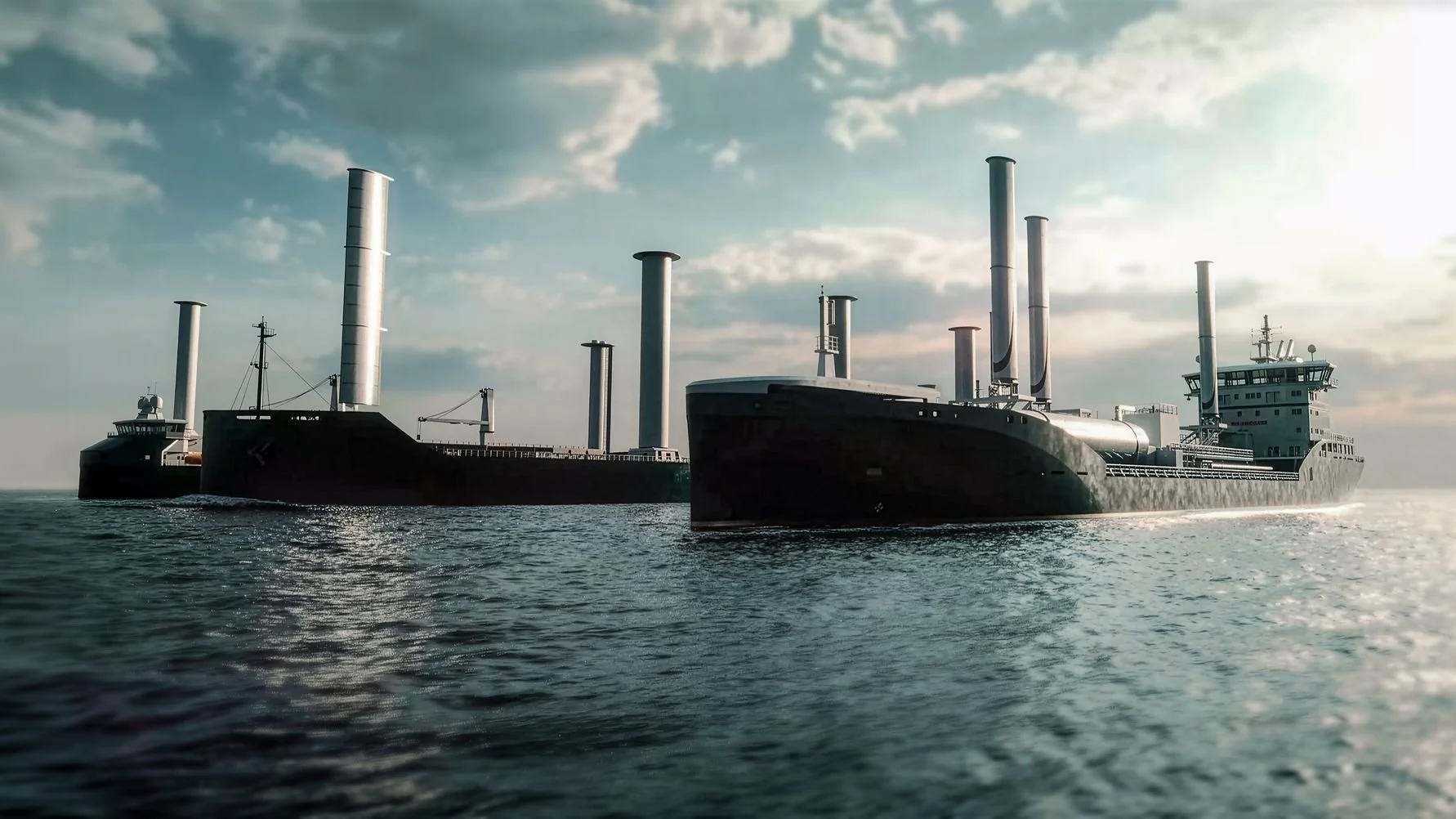
Kongsberg Maritime and a consortium of leading Norwegian maritime companies and research institutions have launched WINTEGRATE, a major research and innovation project aimed at accelerating the adoption of wind propulsion in commercial shipping.
The project has been awarded up to NOK 68 million through Norway's Green Platform programme.
WINTEGRATE will develop technologies and methodologies that integrate Wind Assisted Propulsion Systems (WAPS), such as rotor sails and suction wings, with ship propulsion, power management, routing and control systems. The goal is to maximize fuel savings and emissions reductions while making wind propulsion easier to implement on both existing vessels and newbuilds.
"WINTEGRATE represents an important step toward making wind propulsion a practical and scalable solution for commercial shipping. By integrating sail technologies with onboard systems, we can unlock significant emission reductions and strengthen the competitiveness of the Norwegian maritime industry," said VP Technology, Erik Hjortland in Odfjell.
While wind propulsion is increasingly recognized as a promising decarbonization technology, its full potential remains limited by insufficient integration with other onboard systems. WINTEGRATE aims to address this challenge through a holistic approach that combines digital technologies, operational optimization and full-scale testing.
The project will use demonstration vessels from shipping companies Odfjell SE and Seatrans, providing operational data to validate technologies and support commercial deployment.
The consortium includes Kongsberg Maritime (project owner), SINTEF Ocean, SINTEF Digital, Odfjell SE, Seatrans, DNV, StormGeo, OsloMet, Norsepower, bound4blue, Corvus, OMS and DIGICAT.
By combining wind propulsion with advanced control, energy management and weather routing systems, the partners aim to significantly increase the emissions-reduction potential of wind-assisted shipping and support the industry's transition toward low- and zero-emission operations.