
INTERTANKO sets out practical steps to support safe transits through the Strait of Hormuz
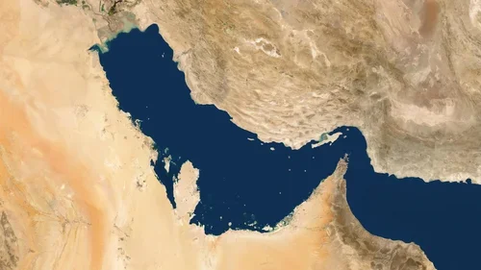
With the peace deal between the US and Iran now signed, INTERTANKO is calling for urgent clarity on the practical steps needed to support the safe transit of vessels through the Strait of Hormuz. While the agreement that formally ends the conflict is welcome, shipowners need certainty about the practical steps to ensure the safety of navigation and the security of seafarers, to be agreed and implemented.
INTERTANKO sees the two-step reopening of the Straits as a process in which the practical realities and safety of navigation need to be prioritised.
First and foremost, clearing the main internationally recognised traffic separation scheme (TSS) of all mine threats must be a priority. Upon completion, a clear and unequivocal message from all Governments involved needs to be issued to the industry.
During the interim period, while the TSS is being cleared and prior to it being officially declared safe for transit, there needs to be greater clarity on the two alternative Northern and Southern route options to ensure the safe transit of vessels into and out of the Gulf.
Key vessel management and transit information needs to be considered, agreed on, and communicated to ships in the region and to those intending to transit the Strait. If the two TSS-alternative routes are to be used during the interim period, then there needs to be:
• Mine clearance to start at the earliest point.
• Mine danger areas need to be published.
• Ships should be assured that they will no longer be subject to attack.
• Assurance that the threat of mines has been eliminated from these alternative routes.
• A command-and-control system should be put in place to manage the traffic during the early stages. If 550 ships are aiming to leave and a likely 60 ships per day would look to transit the Strait of Hormuz, then the existing routes are inadequate to handle this.
• How vessels will be managed in terms of transit times and available ‘slots’, including how such transits will be booked and with which entity/single-point of contact
• A single point of contact, preferably for the entire Strait, but in the interim for each route, with close coordination between them.
• Clarity on procedures in terms of who to report to and when.
• The Southern routes moved offshore, the lanes widened, and a lateral separation created between the directions of flow.
Once the main TSS is returned to operation as the primary route, the Northern and Southern routes should be closed.
INTERTANKO Marine Director Phillip Belcher commented: “As we move forward, the status of transit passage through the Strait of Hormuz needs to be emphasised. Article 5 of the MoU states that no tolls will be charged for the first 60 days; however, the future is unclear and will be determined by Iran following dialogue with Oman and discussions with the Gulf States. The final outcome of these discussions must be a reinforcement of the central tenet that the Strait of Hormuz must remain free of charges and open to all in accordance with UNCLOS”.
“Once these steps are taken, the shipping industry should have the reassurance needed to recommence carrying world trade and energy through the area, and seafarers can return to the role for which they are trained, rather than be placed on the front line of a geopolitical conflict.”
Urging continued caution, INTERTANKO Managing Director Tim Wilkins commented: “Without clarity on these issues, ships will be unsure whether to transit the Strait of Hormuz. Some ships will, of course, start to move. That will be natural. But ship owners have adopted a very cautious approach. The safety and security of seafarers have been uppermost in their minds, and no one wishes to jeopardise that safety-first approach when things appear to be moving in the right direction.
We must remind all States involved that the internationally recognised TSS was introduced in 1968 to support the safe transit of internationally trading deep water vessels and to avoid the navigational risks, and so ensure safety at sea. “