
NAPA introduces AI-powered Permit to Work Dashboard to enhance maritime safety
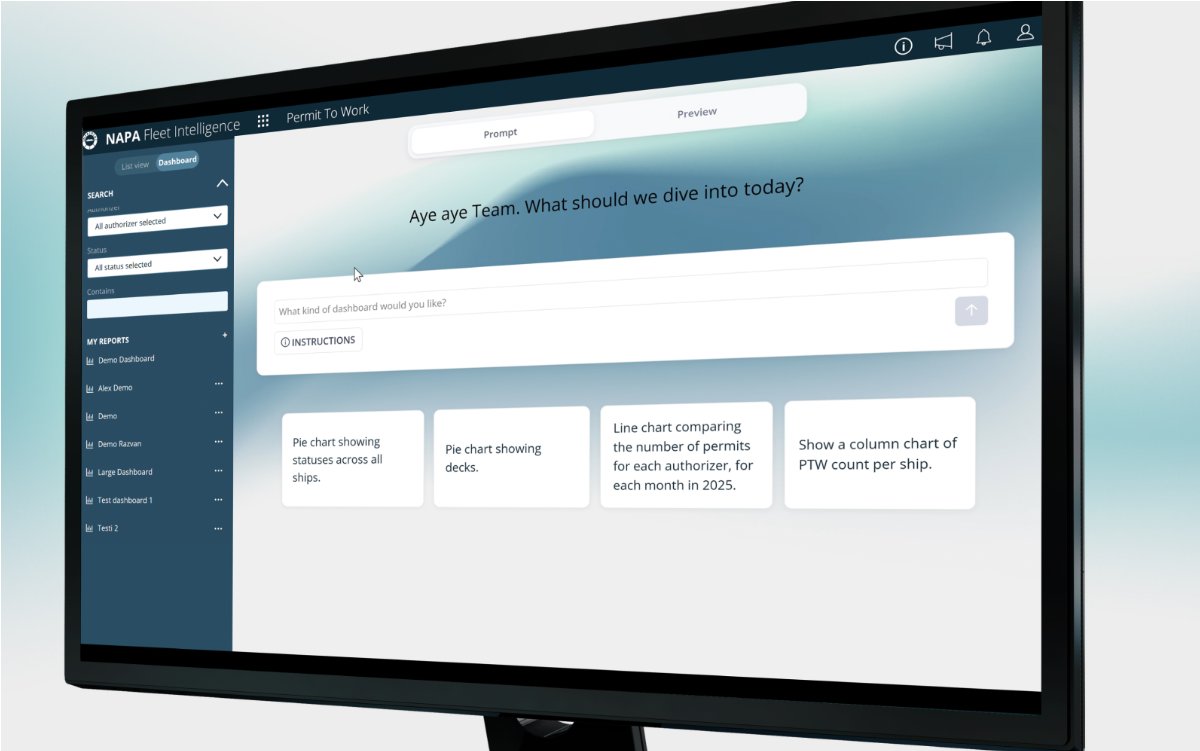
Maritime software and data services provider NAPA has launched an AI-powered Permit to Work (PtW) Dashboard within NAPA Fleet Intelligence, its cloud solution. The functionality, which is live now and adopted by Virgin Voyages and Ritz Carlton Yacht Collection fleets, gives shoreside fleet managers and safety officers a natural language interface – one of the first in maritime software - for permit analytics. This allows them to describe the data views they need in plain English and receive interactive, reusable and customisable dashboards instantly across multiple vessels, time periods and dimensions.
The launch of NAPA’s AI-powered PtW coincides with the IMO’s Day of the Seafarer and is described by NAPA as an active investment in addressing shipping’s growing safety gap, as new technologies and regulations are introduced. Growing regulatory and administrative pressures introduce processes that are safety-critical, audit-sensitive, and heavily dependent on accurate record-keeping across multiple vessels simultaneously.
Research by the International Seafarers' Welfare and Assistance Network (ISWAN) found that 54% of seafarers report increased workload and 44% report higher stress levels. Manual administrative tasks, including permit management and safety reporting, can account for up to 20% of crew time. NAPA's own benchmarking with customers indicates that digitising record-keeping with NAPA Logbook can recover up to 2,000 administrative hours per ship per year.
The new AI functionality is part of NAPA’s broader, multi-product and multi-year AI roadmap to strengthen maritime safety. The plan is focused on a principle-based approach to implement AI where it adds operational value to crew and shore teams. In May 2026, for example, NAPA released its AI-assisted cargo loading functionality within NAPA Stability, developed in collaboration with Stena Line for RoRo and ferry operations, which reduces cargo planning time from 1-1.5 hours to 10 to 15 minutes per departure.
The roadmap includes active development across NAPA Fleet Intelligence, focusing first on shoreside support to include anomaly detection in NAPA Logbook and Voyage Reporting, then extending to NAPA Logbook, PtW and Voyage Reporting functionalities onboard.