
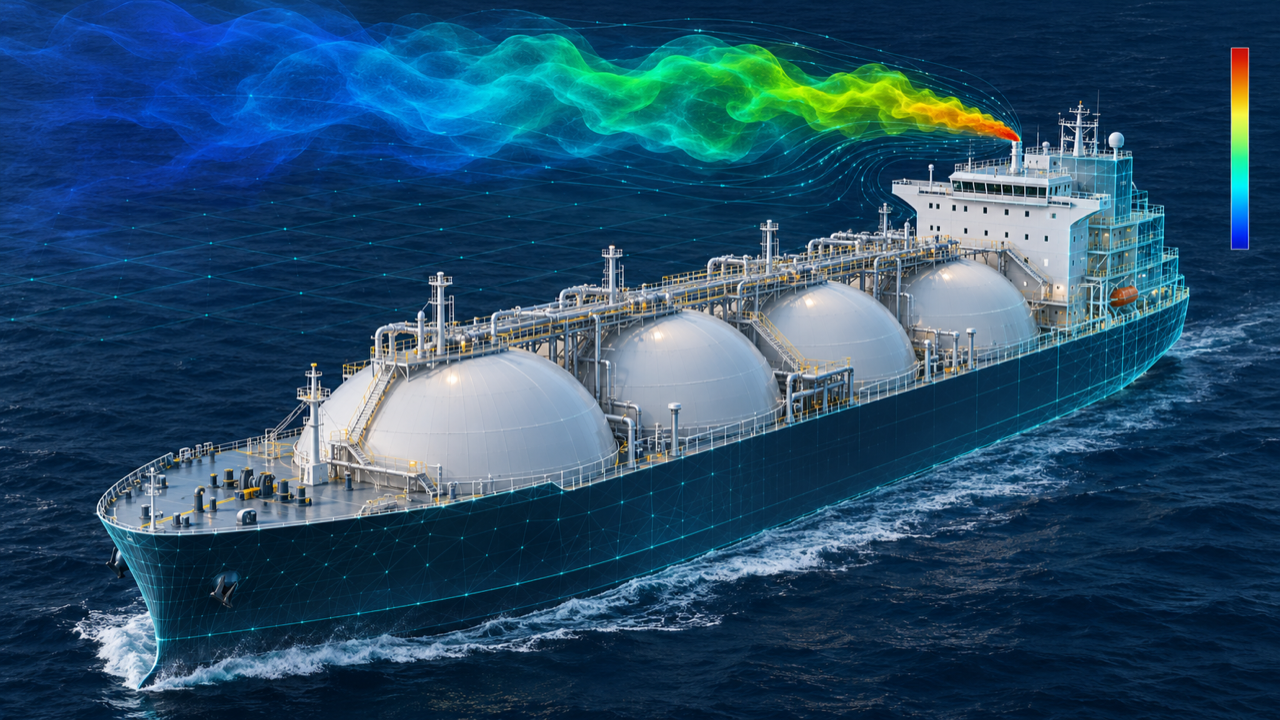
IACS, the international association of classification societies, has published a new Recommendation on gas dispersion analysis, marking a further significant contribution in its support of the safe decarbonisation of the maritime industry. The new guidance provides information on the best practices and requirements for carrying out gas dispersion analysis for Ships using gaseous fuels such as Ammonia and Hydrogen.
Rec.202 is another significant deliverable from the IACS Safe Decarbonisation Panel and draws on several years of technical work and engagement with fuel manufacturers, technology providers, shipowners, shipbuilders, marine insurers and flag States. It provides a critical technical framework to support the safe use of alternative fuels such as ammonia and hydrogen, helping the maritime industry transition responsibly toward cleaner energy solutions.
Recognising that the International Code of Safety for Ships Using Gases or Other Low-Flash-point Fuels (IGF Code) does not currently provide prescriptive requirements to address the hazards presented by alternative low or carbon-free alternative fuel options such as Ammonia, Hydrogen, etc., the IMO has developed interim guidelines for these fuels, including provisions for risk assessment and gas dispersion analysis. IACS’s Rec.202 supports this regulatory framework by providing detailed technical guidance for industry, IMO and other key stakeholders.
Key highlights and benefits of Rec.202 include:
• Clear, Harmonized Best Practices for gas dispersion analysis The Guidelines establish harmonized best‑practice requirements for modelling flammability, toxicity, and gas‑dispersion hazards, ensuring a consistent and transparent basis for risk assessment across ship designs and fuel systems. By promoting a common technical understanding among IACS members, Flag Administrations, and industry stakeholders, they enhance confidence, support regulatory alignment, and enable the safe and effective deployment of alternative fuels
• Robust Expectations for Modelling Quality and Competency By specifying expectations for modeller competency, model validation, environmental conditions, and scenario selection, the guidelines strengthen the reliability and credibility of gas dispersion studies submitted to IACS members and Flag Administrations.
• Strengthening risk-based design and decision-making The Guidelines ensure that gas‑dispersion results are effectively integrated into ship design-informing decisions related to vent mast location, hazardous area classification, gas detection placement, ventilation design, and emergency planning, ultimately enhancing safety for crews and ships.
Commenting on the publication of Rec.202, Robert Ashdown, the Secretary General of IACS said: “When IACS established its Safe Decarbonisation Panel in 2022, it explicitly recognised that some tasks would require joint working with flag States, industry bodies and others in order to deliver safe, responsible pathways for shipping’s decarbonisation, and a framework to facilitate such cooperation was devised. Rec.202 constitutes the first output arising from such a joint undertaking. It highlights how successful cooperation and coordination can result in outputs that advance the broader decarbonisation objectives of the industry and underpin other initiatives at IMO and elsewhere.”