
Review 2025 / Preview 2026 (Part 3, companies M to R)
SMI asked a number of companies across different sectors of the shipping industry what they saw as having been the main trend in their sector during 2025, and how they saw this evolving - or how they would like it to evolve - in 2026?
Below are their answers, listed by company in alpha order, in some cases edited slightly for reasons of space.

Marine Medical Solutions - Dr Jens Tülsner, CEO and Founder
The main trend in the medical field within the maritime industry is undoubtedly the growing awareness of all aspects of health. While ‘mental health’ is currently at the forefront, the encouraging part is that health has many dimensions, all of which apply to seafarers as well.
I would like to see this increased awareness lead to greater engagement across the industry in comprehensive healthcare, from tools that support more personal communication, to improved onboard diagnostics, to easy to use systems for capturing and monitoring vital signs, and to training provided to onboard responsible officers that aligns with current medical standards and takes a practical, pragmatic approach.

MarinePALS - Capt. Pradeep Chawla, CEO and Founder
In 2025, the main trend in our sector was a growing recognition that safety and operational performance depend on continuous learning rather than simple compliance. Many companies placed greater emphasis on practical training and regular refreshers, giving seafarers the confidence to manage challenges on board and to understand the reasoning behind safe practices. This shift showed that when learning is relevant and accessible, crews engage more actively and safety standards rise across the fleet.
In 2026, I would like this direction to strengthen further. We must help seafarers stay safe and also look after their mental wellbeing. Training should not only teach procedures but also build a culture that respects the people on board and values their judgement. There should be no sense of ‘them’ and ‘us’ between stakeholders ashore and seafarers. Seafarers deliver success to the world economy every day. When we care for them sincerely, support their development and work with them as one team, our industry becomes safer, stronger and better prepared for the future.

MCTC - Christian Ioannou, Group CEO
In 2025, our [catering] sector experienced a clear shift toward elevating crew welfare, strengthening operational efficiency and embracing sustainability across all levels of life onboard. Shipping companies placed greater emphasis on professionalising galley operations, recognising that well-trained culinary teams contribute directly to safety, morale and overall vessel performance. At the same time, digital tools have been adopted helping companies streamline processes and respond effectively to rising regulatory expectations.
As we look ahead to 2026, we expect these developments to continue gaining momentum. The transition to cleaner fuels and greener technologies will require crews who are not only technically competent but also supported through proper nutrition, wellbeing initiatives and modern training approaches. At MCTC, we hope to see even closer collaboration across the industry to raise standards, modernise the galley environment and invest in long-term crew development. Our goal is to continue expanding our culinary training programmes, provide data-driven catering and health-support solutions, and promote a culture of continuous learning and wellness on board. By doing so, we can move confidently into a more sustainable, resilient and people-centred future.

Mental Health Support Solutions (MHSS) – Charles Watkins, Founder and Director of Clinical Operations
The biggest trend in 2025: our entire mental-health model for seafarers is non-existent or outdated. We keep trying to ‘fix’ individuals while ignoring that the operational environment itself causes psychological strain. In 2026, the sector must accept that the ship—not the seafarer—is often the patient. We need to assess vessels the same way we assess people: for toxicity, psychological hazards, and cultural dysfunction. Until we treat mental health as an engineering and organisational problem rather than a personal weakness, nothing will change.
So going a step further: Every vessel would carry a ‘Mental Health Load Line’, showing the maximum emotional and cognitive strain the crew can safely absorb under current operating conditions. Factors such as crew composition, contract length, leadership stability, incident history, workload intensity, sleep disruption, cultural mix, and levels of Internet connectivity would determine this capacity. If the vessel exceeds this psychological threshold, it would trigger mandatory organisational actions including increased manning, rotation adjustments, onboard counselling, rest enhancement measures, leadership briefings, or operational slowdowns. This turns mental health into a measurable operational risk, with the vessel rather than the individual becoming the unit of analysis, and it changes the question from “Is the seafarer fit for duty?” to “Is the ship fit for the seafarer?”
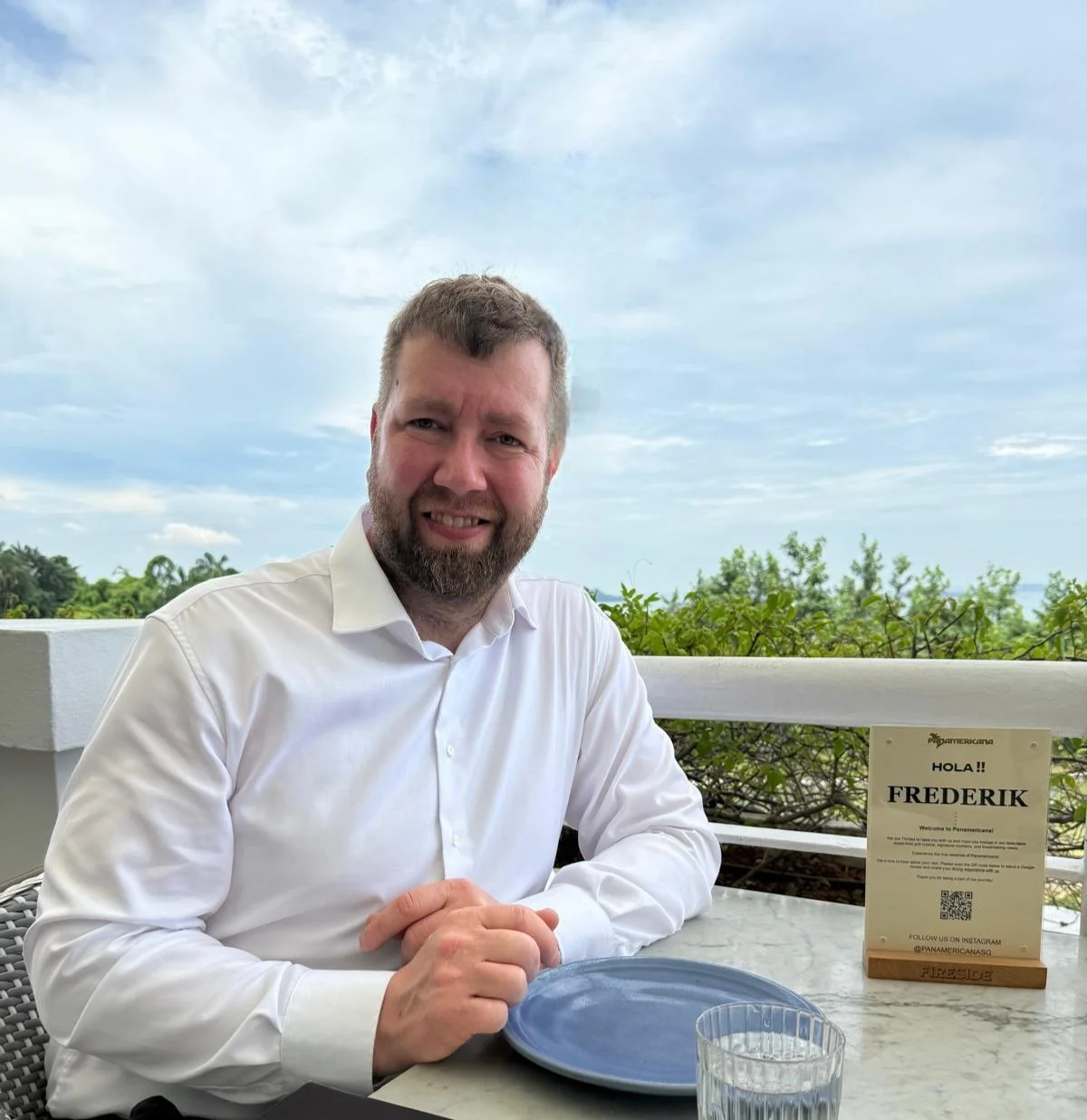
Oceanly - Frederick Lerche-Tornoe, CEO
In 2025, the standout trend in our sector hasn’t been “more data”, but better, trusted data. With EU ETS, CII, FuelEU Maritime and tightening reporting requirements, shipowners are increasingly focused on validation, traceability and the quality behind every datapoint. High-frequency data is getting more attention, but the real shift is towards high-frequency data that’s accurate and verified — the kind you can rely on for day-to-day operational decisions as well as compliance.
We’ve also seen a growing openness around data ownership and transparency. More shipowners are questioning closed platforms and asking who truly controls their operational data. The push for full ownership, open integrations and clear audit trails is becoming much more visible.
Alongside that, AI is starting to move from “nice to have” to genuinely useful in maritime. But its value is only as strong as the data it’s fed. As confidence in validated datasets grows, we’re seeing more practical AI use-cases emerge — from smarter voyage optimisation and fuel efficiency support to automated anomaly detection and compliance checks. In short: trusted data is becoming the enabler for trusted AI.

OneCare Group - Marinos Kokkinis, CEO
Throughout 2025, the maritime sector has seen a decisive shift toward the integration of health, wellbeing, and learning within unified digital ecosystems, underpinned by the principles of integrated care. This reflects a growing understanding that crew health, retention, and operational performance are interdependent, and that fragmented support systems are no longer sufficient for modern fleet operations.
The industry’s focus has increasingly moved from reactive intervention to proactive, predictive, and preventative care, driven by data intelligence, real-time monitoring, and behavioural analytics. This transition enables earlier detection of physical and mental health risks, leading to more effective interventions and enhanced operational continuity.
Looking ahead to 2026, I expect continued progress toward connected, evidence-based health ecosystems, similar in philosophy to the integrated model we have been advancing at OneCare Group. This evolution should establish seafarer wellbeing as a strategic pillar of safety, performance, and sustainability, shaping a healthier and more resilient maritime workforce.

OneHealth by VIKAND - Ronald Spithout, MD
If anything, we are seeing a growing general acceptance that urgent action is needed on seafarers’ wellness and mental health. Although industry indicators have been signalling for years that this is a critical area requiring attention, it is only as recently as 2025 that we are seeing large industry bodies such as the IMO, P&I Clubs, Flag States and shipowners or operators formally acknowledge the issue and take meaningful action.
Particularly among operators, we are observing RFQs and tenders that are increasingly detailed, with higher quality questions than before. This demonstrates that internal studies are feeding into projects and translating into concrete commercial requirements, which is an encouraging development.
However, this increased focus has also led to the emergence of offerings in the industry that approach mental health and wellness more from a commercial standpoint than from a clinically informed one, which can undermine the seriousness of the issue. Operators should be cautious, as this approach risks creating a false sense of protection against health risks without addressing the real challenges crew face at sea.
To make a lasting difference, providers must combine genuine medical expertise with a deep understanding of the maritime environment. Only professionals who truly understand life at sea can design and deliver interventions that are both clinically sound and operationally relevant.
With new amendments to the Standards of Training, Certification and Watchkeeping (STCW) set to take effect on 1 January 2026, explicitly addressing bullying and harassment, we also advocate that, while these changes are welcome, regulations alone will not solve the problem unless companies address the root causes of poor wellbeing, including leadership culture, communication and respect onboard.