
Review 2025 / Preview 2026 (Part 2, companies F to L)
SMI asked a number of companies across different sectors of the shipping industry what they saw as having been the main trend in their sector during 2025, and how they saw this evolving - or how they would like it to evolve - in 2026?
Below are their answers, listed by company in alpha order, in some cases edited slightly for reasons of space.
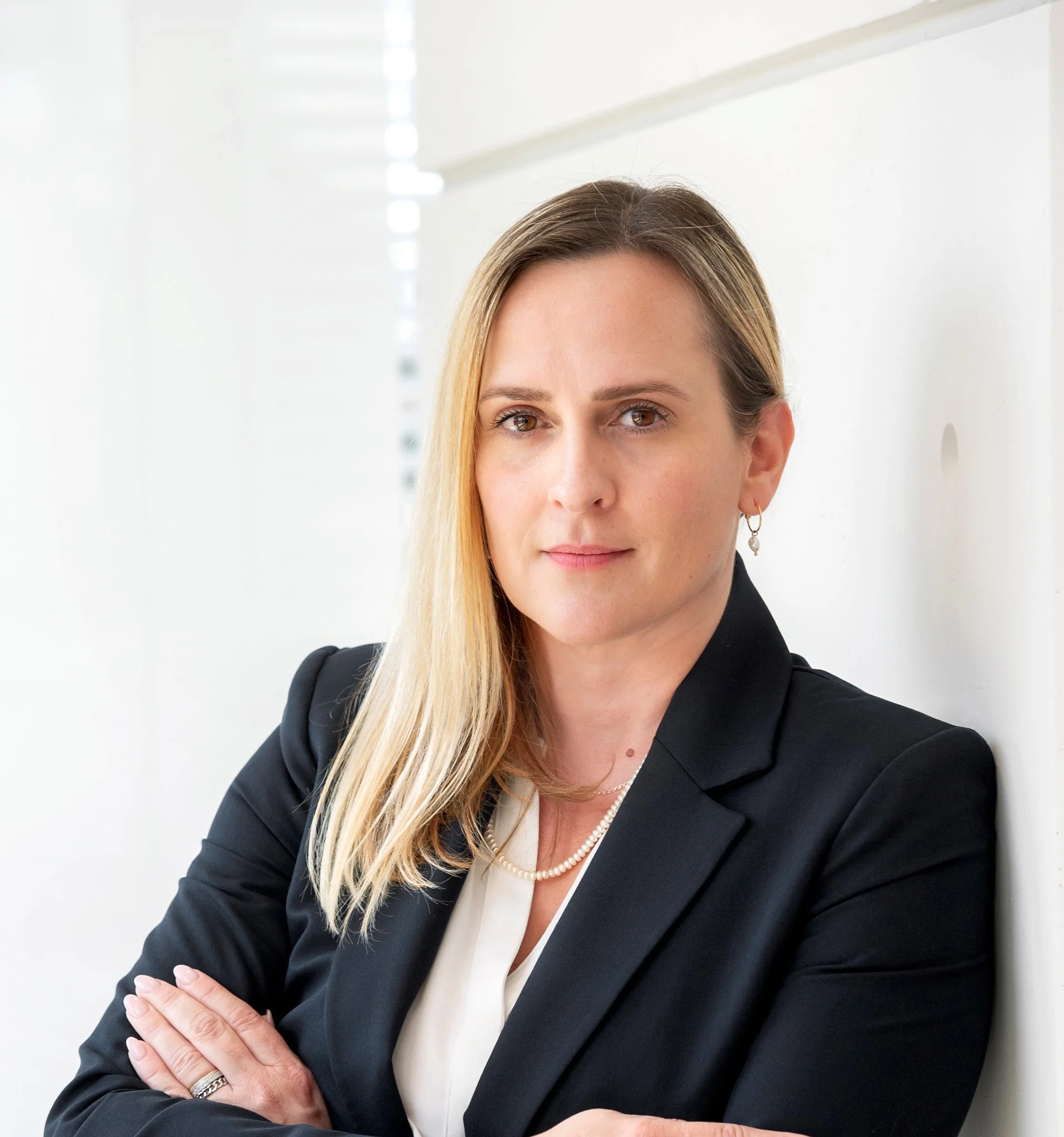
GenPro - Maria Theodosiou, Managing Director
In 2025, the main trend in our sector was the shift from digital experimentation to digital discipline. AI and data-driven tools moved from pilots into real operations, underpinned by the hard reality of EU ETS and FuelEU Maritime, which now require auditable emissions, fuel and voyage data. At the same time, the market for marine procurement and AI solutions is growing quickly, reflecting owners’ and managers’ demand for integrated, evidence-based decision making rather than ad-hoc buying.
For GenPro, this translated into accelerating our move from ‘platform’ to ‘ecosystem’ – connecting procurement, supplier performance, ESG and compliance in one governed environment.
In 2026, I expect this to evolve into practical AI at scale: not headline projects, but embedded tools that help procurement and technical teams make better decisions, faster, with clear audit trails. The winners will be those who treat data as an asset, AI as a capability, and governance as non-negotiable.

GTMaritime - Jamie Jones, COO
The entire maritime industry is evolving in a world of increasing automation and data transparency. For the maritime communications sector, the main trend is to address data security holistically for all vessels and provide solutions to enhance security, efficiency, optimisation, and reliability. The goal is to give more assurance in terms of peace of mind, making sure data is safe, that data can reliably get from one location to another, whether that be with email or a file transfer solution. When vessels become more cyber secure, that helps the entire maritime industry function at a higher level and helps tackle barriers to digitalisation.

Idwal - Nick Owens, CEO
In 2025, the clearest trend for us has been a much stronger push for data transparency, due to regulatory pressure, commercial scrutiny and rising ESG expectations. Stakeholders increasingly recognise that reliable insight, not assumptions, is what underpins safer, more efficient, and more sustainable operations.
Within this shift, vessel condition data plays a central role, with owners, managers, charterers, and financiers seeking higher quality, independent information to benchmark quality, support decisions, and demonstrate accountability.
In 2026, we expect this to continue, with greater emphasis on standardisation and visibility moving the industry toward a shared, transparent understanding of vessel quality that raises standards across the global fleet.
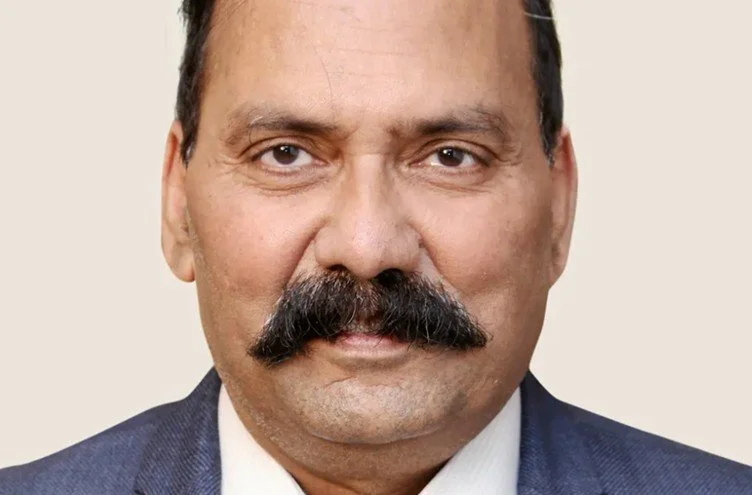
Indian Register of Shipping - Mr PK Mishra, MD
In 2025, the defining trend in classification has been the move from high-level decarbonisation commitments to practical implementation on board ship. Owners are looking for clear, technology-neutral guidance on alternative fuels, new energy-efficiency technologies and the growing web of regional and global regulations. At the same time, we are seeing strong interest in digital tools – as operators try to improve safety, reduce downtime and make better use of data.
In 2026, we expect, and would like, this to evolve into a more integrated approach to risk management. Instead of treating fuel choice, digitalisation, safety and lifecycle costs as separate conversations, we see our role as helping stakeholders evaluate them together through robust rules, notations and technical guidance. If we can align innovative technology with realistic implementation timelines, transparent data and strong support for seafarer skills, the sector can make tangible progress on emissions while reinforcing, not compromising, the fundamentals of safety.

InterManager - Kuba Szymanski, Secretary General
Decarbonisation is the key trend of 2025 and the defining challenge of our industry. Ship managers are charting practical paths forward in the absence of agreed global regulation, mainly through operational efficiency, strategic retrofits, and fuel flexibility. InterManager's mission is to ensure the needs of industry are balanced by an unwavering commitment to safety and training for seafarers across global fleets."

International Salvage Union – James Herbert, Secretary General
A key trend in the salvage industry in 2025 was the continuing recognition from stakeholders that the industry must not be taken for granted and needs to be financially sustainable. The modest recovery in revenues continued after the low point of 2023.
In 2026 shipowners and insurers will continue to rely on the members of the International Salvage Union (ISU) to help them meet their ESG obligations if one of their ships becomes a casualty and the ability to provide those essential services around the world must be sustained.
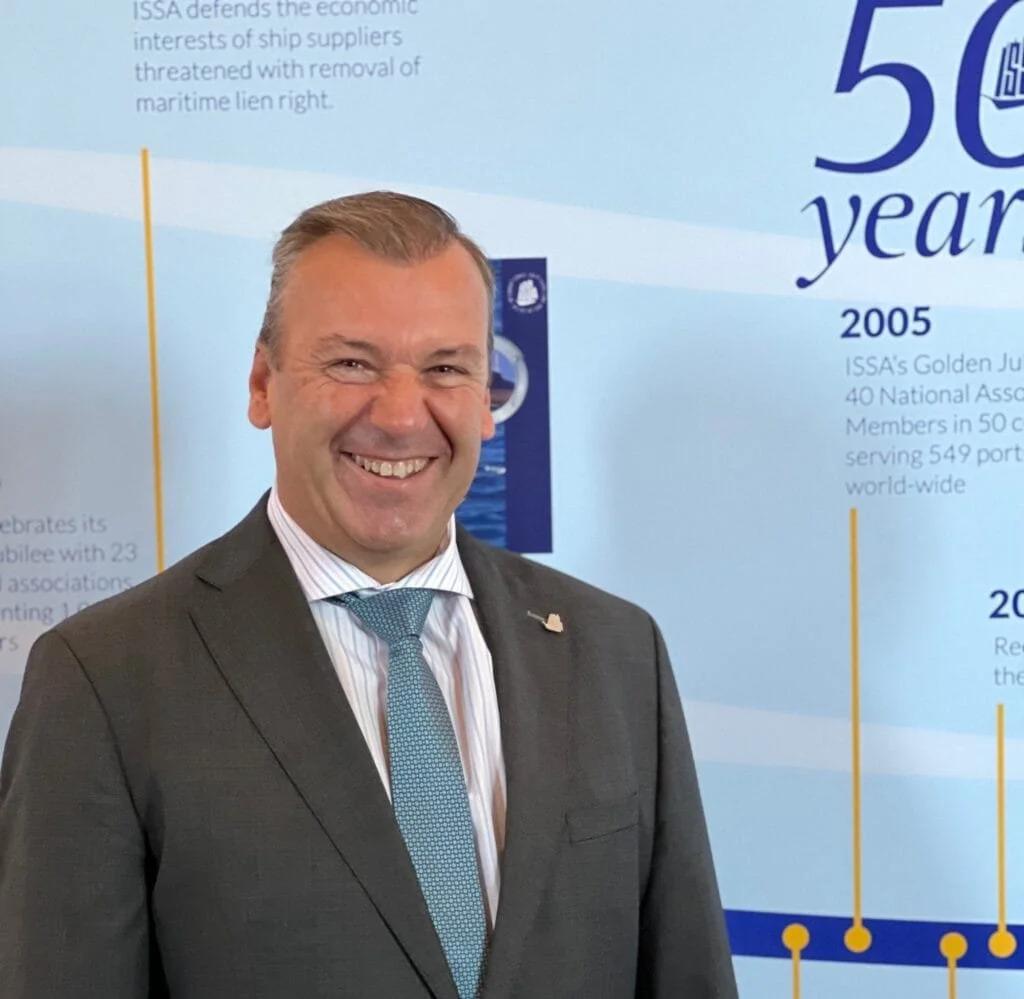
International Shipsuppliers & Services Association (ISSA) - Rafael Fernandez, President
Digitalisation & AI: We can no longer say that IT or new digital tools are experimental. They are here to stay and throughout 2025 have proven to be an effective tool in optimising our processes. In my opinion, this is only the beginning — in 2026 and in the years that follow, we will undoubtedly see exponential growth in this exciting technology.
Sustainability & decarbonisation push is accelerating: This point has been on everyone’s lips in recent years and has taken up a considerable amount of our time and effort throughout 2025. Although it is an issue we must not — and cannot — afford to ignore, we do expect to see some stabilisation. There have been too many actions in a short period of time, and each of them requires a significant investment of both time and money.

Kaiko Systems – Fabian Fussek, CEO and Co-Founder
The biggest trend in 2025 has been the shift from basic digitalisation toward true automation. Maritime moved beyond simply replacing paperwork with digital tools and began adopting AI-driven workflows that reduce administrative burden, strengthen readiness, and improve day-to-day decision-making on board and ashore. At the same time, we’ve seen the early signs of a much larger global pattern reaching our industry: in many other service sectors, AI-enabled consolidation is reshaping competition. Operators who use standardised data and automated processes are already outperforming traditional players on cost, speed and reliability.
In 2026, I expect to see maritime accelerate in this direction. The evolution will be from collecting data to using AI to turn that data into action, from fragmented systems to interoperable ones, and from manual processes to automated, continuously ready operations. Companies that embrace this shift will gain a decisive efficiency advantage. Those that do not risk being left behind as the industry inevitably moves toward more streamlined, AI-supported operating models.