
Seafarer welfare and decarbonisation dominate agenda as global maritime leaders gather at Posidonia 2026
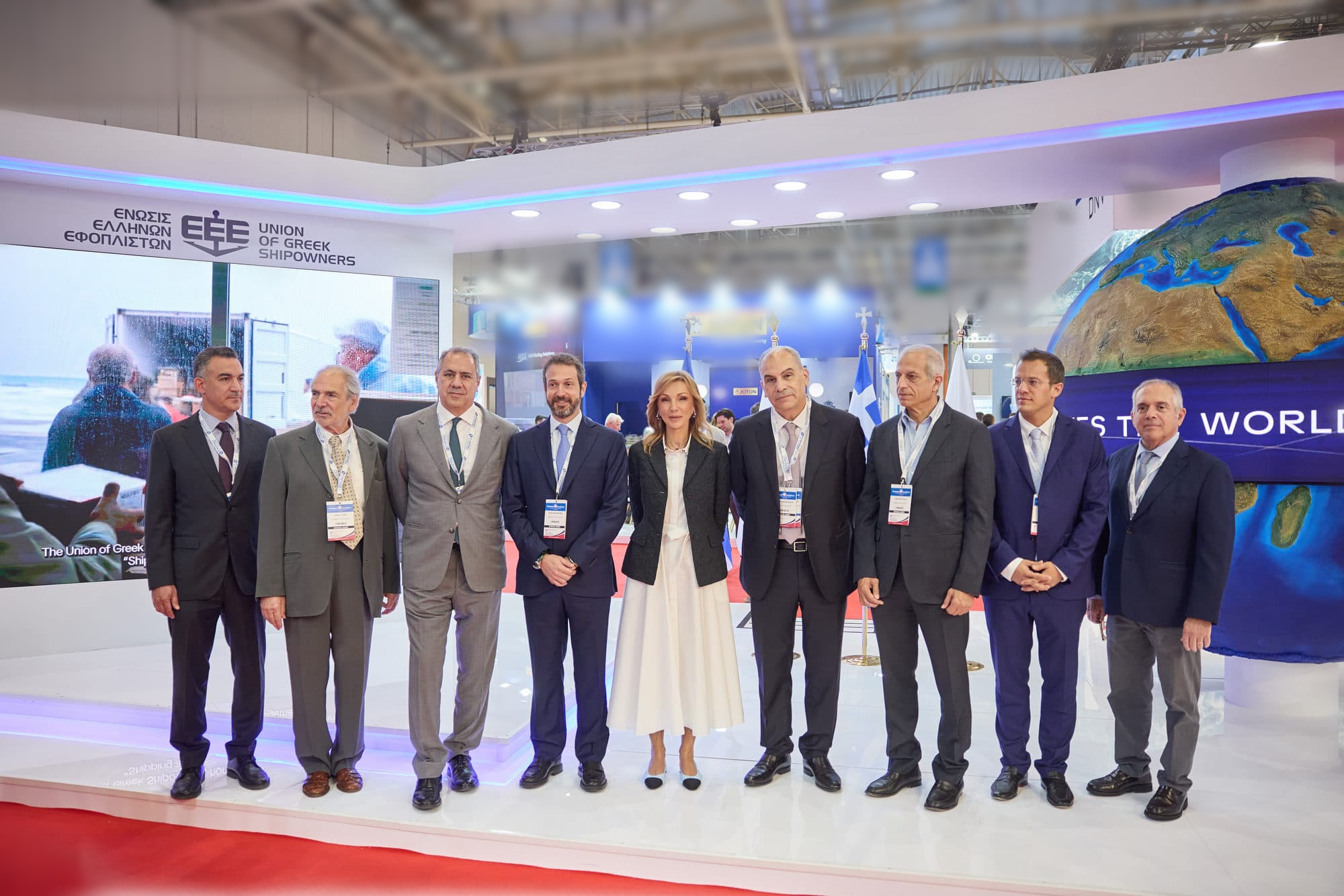
Photo Caption (from left)
Mr. Vasileios A. Papagiannopoulos, Member of the BoD of the Union of Greek Shipowners
Mr. John C. Lyras, Member of the BoD of the Union of Greek Shipowners
Mr. John A. Xylas, Treasurer of the Union of Greek Shipowners
Mr. Nikolaos Th. Veniamis, Secretary of the Union of Greek Shipowners
Mrs. Melina N. Travlos, President of the Union of Greek Shipowners
Mr. George K. Karageorgiou, Member of the BoD of the Union of Greek Shipowners
Mr. Aristeidis I. Pittas, Member of the BoD of the Union of Greek Shipowners
Mr. Ioannis S. Lekanidis, Member of the BoD of the Union of Greek Shipowners
Mr. Dimitrios J. Fafalios, Secretary of the Union of Greek Shipowners
Seafarer welfare and shipping's path to decarbonisation emerged as the defining themes of Posidonia 2026, as senior maritime policymakers, regulators and industry leaders gathered in Athens to assess the challenges facing global shipping amid geopolitical instability and accelerating regulatory change.
Speaking on the third day of the exhibition, International Maritime Organization (IMO) Secretary-General Arsenio Dominguez identified the wellbeing and safety of seafarers as the organisation's foremost priority.
“Seafarer wellbeing and seafarer safety is our top priority,” he said, noting that crews continue to face heightened risks as geopolitical tensions affect major shipping routes. “In zones of conflict, it is the seafarers who are on the front line, dealing with uncertainty, psychological stress and concern for their own families.”
Sec-Gen Dominguez called for renewed support for freedom of navigation and urged the industry to accelerate investment in energy-efficiency technologies, alternative fuels and dual-fuel vessels while continuing to attract and retain maritime talent.
The human impact of ongoing geopolitical tensions was also highlighted by Melina Travlos, President of the Union of Greek Shipowners, who stressed the need to protect seafarers operating in increasingly volatile regions.
“Seafarers should never have to face conditions of increased risk, let alone risks to their very lives,” she said. “We hope that peace and respect for international law will prevail, so that the seas remain open, safe, and free for the benefit of all peoples.”
She also cautioned against viewing shipping's decarbonisation challenge in isolation from the wider energy ecosystem.
“Shipping's decarbonisation is utterly dependent upon external factors,” she said, arguing that the availability of alternative fuels, technologies and supporting infrastructure remains outside the industry's direct control. “The green transition requires technological feasibility, economic viability, global coordination, and a level playing field.”
The debate over implementation pathways was echoed by Malta, whose shipping administration has positioned itself as an advocate of technology-neutral regulation and pragmatic deployment of emerging solutions.
“We are actively moving past administrative sluggishness,” said Dr Ivan Tabone, Registrar General of Shipping and Seamen at the Malta Ship Registry. “If a vessel can thoroughly prove its safety through Alternative Design and Arrangements, our technical department will facilitate its deployment now, rather than allowing it to be delayed by bureaucratic backlogs.”
Dr Tabone added that Malta is already preparing its fleet for future greenhouse gas fuel-intensity requirements despite delays in finalising the IMO Net-Zero Framework.
“The IMO Net-Zero Framework may be experiencing diplomatic and political delays, but the work on technical guidelines must not pause,” he said, reiterating Malta's support for a globally harmonised regulatory regime.
Calls for closer collaboration between policymakers and industry stakeholders were also made by Cyprus Shipping Deputy Minister Marina Hadjimanolis, who pointed to the simultaneous pressures of geopolitical instability, digitalisation, decarbonisation and regulatory change.
“Open and constructive dialogue between policymakers and industry stakeholders is therefore more important than ever,” she said.
Representing Asia's leading maritime hub, Singapore Senior Minister of State for Law and Transport Murali Pillai highlighted continued investment in digitalisation and sustainability initiatives.
“Singapore remains committed to being a trusted node in global trade,” he said. “We are charting the course ahead and investing in our port's digital and decarbonisation capabilities to support a more resilient, efficient and sustainable maritime future.”
From Gibraltar, Minister Gemma Arias-Vasquez emphasised the importance of balancing decarbonisation objectives with operational realities, while highlighting the territory's support for seafarer welfare through strong labour standards and practical assistance for visiting crews.
As Posidonia 2026 entered its final stages, a clear consensus emerged among delegates: the industry's future will be shaped by its ability to safeguard its workforce while delivering a realistic and globally coordinated energy transition. With regulatory frameworks still evolving and geopolitical risks showing little sign of abating, both objectives are expected to remain at the centre of the maritime agenda for years to come.