
Posidonia 2026 opens its gates to record exhibitors and expanded conference programme
The global maritime community is gathering in Athens this week at a moment of acute strategic significance: with the Strait of Hormuz still closed to commercial traffic and energy supply chains under severe strain, the industry's mandate to keep the world fed and moving has never been more visible - or more tested.
Against this backdrop, and amid intensifying pressure from evolving environmental compliance regulations, Posidonia 2026 opens as the most anticipated edition of the exhibition in its nearly 60-year history.It is the largest edition in the exhibition's history, with 2,227 exhibitors from 83 countries and territories and a record 24 national pavilions - including the official return of Germany and Italy after a long absence - spread across 45,000 square metres of gross leasable area at the Athens Metropolitan Expo.
The 2026 conference and seminars programme comprises some 70 shipping conferences, forums and seminars, many of which are being held outside the exhibition venue for the first time due to unprecedented demand.
The organisers are ready to welcome more than 40,000 participants to the exhibition centre through Friday, 5 June 2026. The total economic turnover generated by Posidonia 2026 for the Greek economy is expected to significantly exceed €100 million.
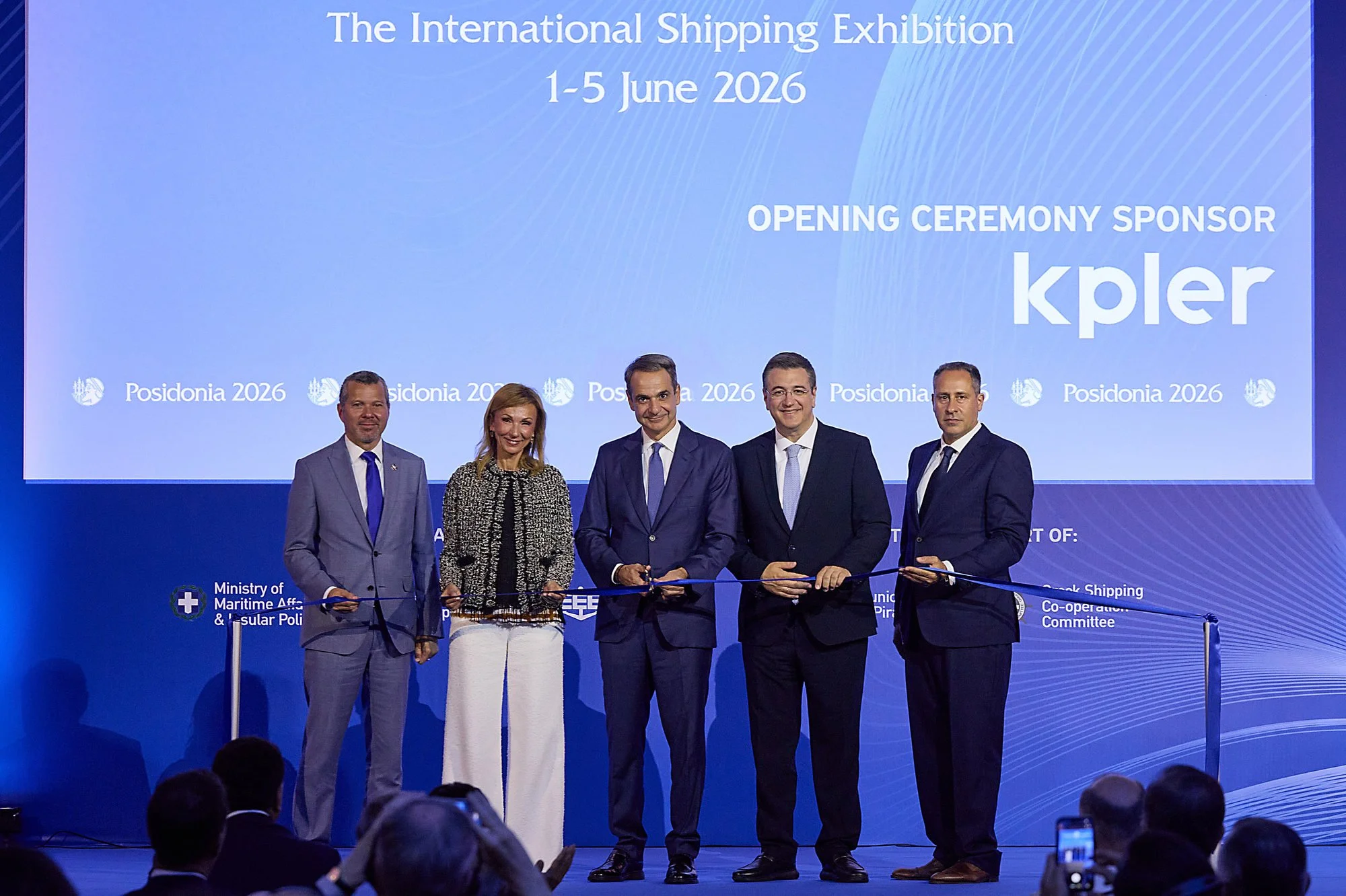
Prime Minister of Greece, Mr. Kyriakos Mitsotakis, addressing representatives of Greek and international media and more than 800 leading figures of the global maritime community at the opening ceremony, said: “Greek shipping constitutes a national and European asset that must be safeguarded, especially at a time when the strategic and geopolitical importance of shipping is being highlighted more strongly than ever in recent years. It is a source of strength for our country, linked to the resilience and strategic autonomy not only of Greece but also of Europe, making our nation a significant player with a pivotal role on the international stage.”
Mr. Arsenio Dominguez, Secretary General of the IMO, spoke about the full range of issues topping the global maritime community agenda - from freedom of navigation, seafarers’ wellbeing and decarbonization to digitalisation - focusing his speech on the major geopolitical issues impacting the world economy.
“Today’s situation in the Middle East - including tensions in the Red Sea and the Strait of Hormuz - presents serious challenges for global shipping, energy security and supply chains,” he said. “It is impossible to overlook the strategic importance of the Strait of Hormuz, a vital energy chokepoint, with disruption and stalling of trade. We should remember that the region was responsible for handling around 20 million barrels of oil per day; 25% of global seaborne oil trade; nearly 20% of global LNG trade; and one third of the fertilizer trade. At the same time, insecurity in the Red Sea has disrupted trade through the Suez Canal, which in usual times carries 12–15% of global trade and 20% of global container traffic.”
Mrs. Melina Travlos, President of the Union of Greek Shipowners (UGS), said: “Let us be pragmatists: Without freedom of navigation, there can be no global prosperity. Without safe and secure sea lanes, there can be no secure global trade. Without a strong shipping industry, there can be no resilient economy. And without realism, there can be no sustainable green transition.”
The growing technological transformation of shipping is strongly reflected at Posidonia 2026, with more than 30 exhibitors showcasing Artificial Intelligence applications designed specifically for maritime operations, and 100 exhibitors presenting environmental technologies in support of the industry's journey toward zero emissions. Nuclear energy as a potential maritime fuel is also emerging as a key agenda topic, with a high-level event set to examine the role of advanced nuclear technologies in commercial shipping and near-shore power generation.