
Columbia Group CEO Mark O’Neil calls for new era of partnership-based ship management at special industry event
The President and CEO of Columbia Group has called for a shift in the traditional ship management model towards a more integrated partnership approach, arguing that the future of the industry lies in closer alignment between shipowners and managers.
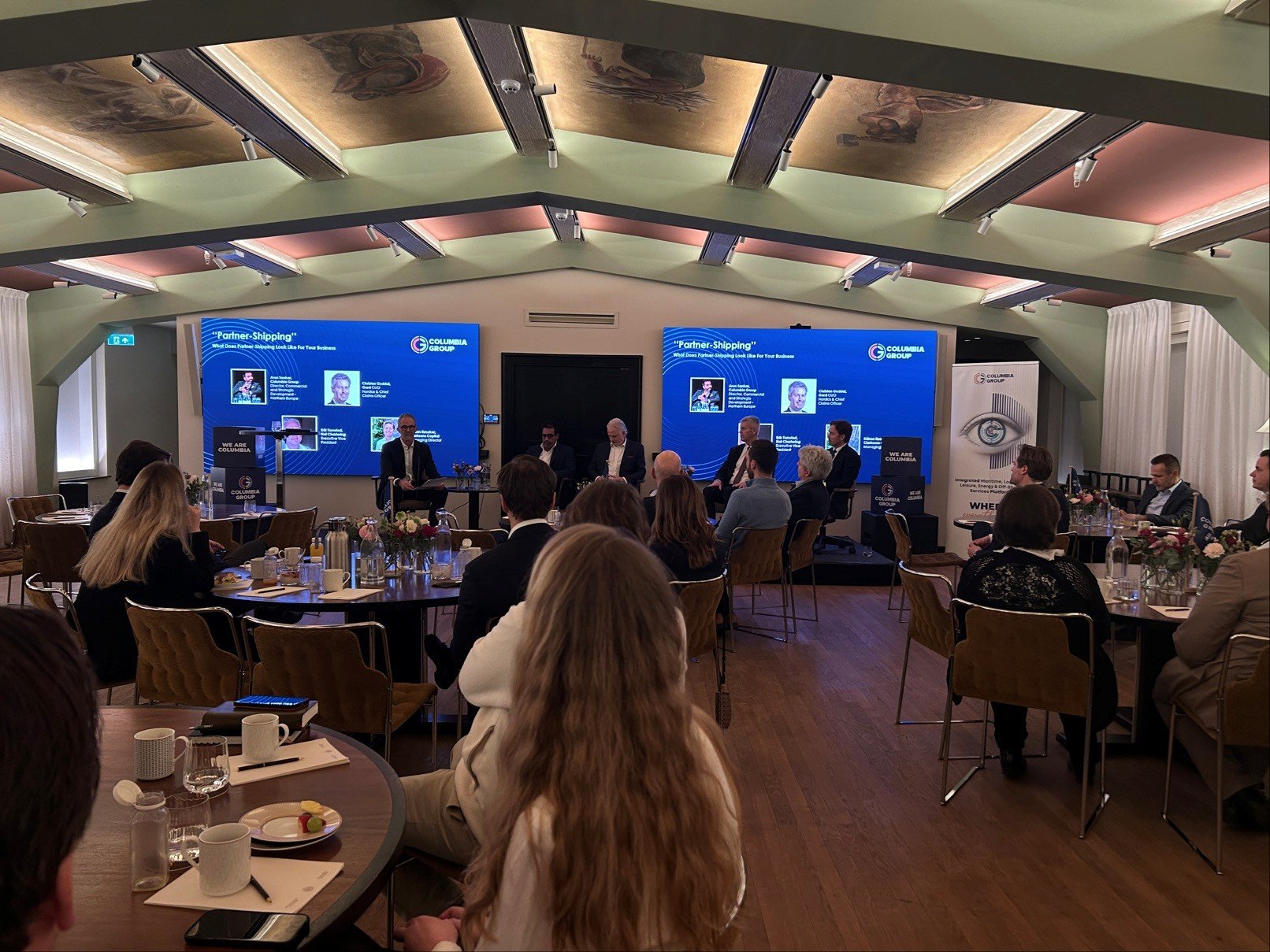
Leading integrated platform in maritime, logistics, leisure and hospitality and offshore services, Columbia Group held an industry event in Oslo Norway this week covering the topic Partner-Shipping: What does partner shipping look like for your business.
In his opening speech, Mr O’Neil reflected on the origins of third-party ship management, which he says emerged more than 50 years ago to separate vessel ownership from technical and crewing operations. The model allowed shipowners to benefit from economies of scale, global resources and the investments large managers could make in technology, training and operational systems.
However, he noted that over time the model became increasingly commoditised.
“Margins in ship management are extremely small, which often led to services becoming standardised,” Mr O’Neil said. “The result was that management sometimes became a process of simply joining the dots, rather than actively thinking and acting in the best interests of the owner.”
The perception that ship managers were detached from owners’ priorities has been a major barrier to the growth of third-party management, he said.
In response, Columbia Group has focused on what Mr O’Neil describes as a partnership or “second-party management” model, where the ship manager operates as an extension of the owner’s organisation rather than as an outsourced service provider.
“It’s a mindset as much as a structure,” he explained. “We call this Partner-Shipping, and it requires what I describe as an ‘insourcing mindset’. Even if we are based in different locations, mentally we must be insourced, not outsourced. We need to think and act as if we are part of the owner’s team.”
He also emphasised that while technology and digitalisation are transforming the maritime sector, shipping remains fundamentally a people-driven industry.
He added that economies of scale remain an important advantage of professional ship management, particularly in procurement, compliance and operational efficiency.
Mr O’Neil then led a panel debate consisting of Hakon Rosaker Clarksons Capital Managing Director; Christen Guddal Gard CUO Nordics & Claims Officer; Erik Tomstad Nat Chartering Executive Vice President; Arun Sankar Columbia Group Director Commercial and Strategic Development Northern Europe; and Andreas Hadjipetrou Columbia Group CCO.
Mr Rosaker reiterated Mr O’Neil’s message on the importance of partnership. He said: “In today’s environment, partnerships and platforms matter more than ever. It’s not just about capital, it’s about working with people you genuinely trust. When you look at a company’s track record, how they’ve operated over the years and the partners they’ve chosen to work with, you learn a great deal about who they are and whether they’re the right partner.”
Mr Guddal added: “Insurance is about much more than capital. It’s about people and how we support each other when something happens. In many ways it’s like the old Carole King song, when you’re down and weary, you need someone you can rely on. That’s what partnership should be: having someone there to work with you when it really matters.”
Mr Tomstad spoke about the importance of having a manager who thinks like an owner.
“That mindset is crucial. It means thinking commercially and understanding the bigger picture, because ultimately, we’re in this together. Our shared goal is to move cargo safely and efficiently and make the operation a success for everyone involved,” he said.
Mr Sankar told delegates: “In strong partnerships, communication is essential — and sometimes that means over-communicating. When partners have access to clear data and regular updates, it builds transparency and trust, which ultimately strengthens the relationship.”
Mr Hadjipetrou spoke about the importance of communication in challenging times.
“In challenging situations, particularly in regions like the Middle East, communication is constant. We stay in close contact with our vessels, ensuring crews have access to mental health support, regular updates from the office and daily calls so they know they are supported at all times,” he said.
Looking ahead, Mr O’Neil said the need for strong partnerships is becoming even more important as the global shipping industry navigates increasing geopolitical uncertainty, regulatory complexity and operational risk.