
Maritime industry can expect a breakthrough year in 2026 for digitalisation, says Smart Ship Hub
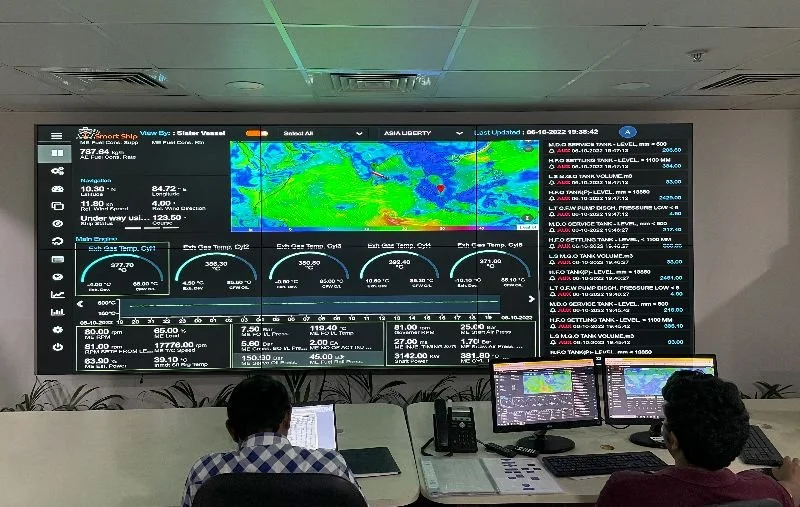
Leading vessel performance platform Smart Ship Hub says the industry should expect a breakthrough year in 2026 where maritime proves that the digital transformation is not optional, it is profitable.
Smart Ship Hub (SSH) believes there will be a sharp acceleration in technology adoption across fleets and maritime value chains in 2026. With demand rising for measurable ROI, real-time intelligence, and enterprise-grade AI, the company expects next year to be the sector’s most transformational year to date.
“The industry is entering a decisive phase,” said Joy Basu, CEO of Smart Ship Hub. “Owners and operators no longer want vague promises. They want clear, measurable value and digitalisation is now delivering exactly that. Time savings, agility, reduced intermediaries, and data-driven processes are directly strengthening both top and bottom lines.”
Mr Basu believes the strongest digital momentum next year will come from measurable ROI frameworks with defined KPIs aligned across owners, operators, charterers, ports, and insurers, as well as high-frequency automated sensor data that will improve accuracy, efficiency, and operational resilience.
Automation through AI and Robotic Process Automation (RPA) will be another key area, reducing manual effort and enabling faster, real-time reporting. Personalised digital services and omni-channel decision support will also advance digital adoption.
“The winners of 2026 will be those who can clearly articulate value and show exactly how digital tools lead to smarter operations,” Mr Basu added.
SSH anticipates significant advances in technology adoption, including: low-cost edge gateways and plug-and-play sensors enabling wide-scale retrofit on older vessels; unified platforms combining machinery data, video feeds, user inputs, and vibration monitoring for real-time fleet awareness; AI-driven digital twins enhancing collaboration between owners, operators, charterers, ports, brokers, and agents, as well as remote inspections and automated vessel health assessments powered by high-frequency data and rule-based intelligence
“These innovations will democratise data,” said Mr Basu. “Advanced insights will no longer be a privilege for a few large companies. They will be accessible across the sector.”
According to Smart Ship Hub, AI will expand from isolated applications to fully embedded enterprise systems influencing safety, compliance, onboard workflows, and commercial decisions.
“AI in maritime must be context-specific and trained on real data,” Mr Basu emphasised. “With accurate models, we can predict failures, forecast emissions, optimise voyages, and support faster port coordination. Predictive intelligence is becoming mainstream, and affordable.”
While the IMO’s Net Zero Framework delay has introduced policy uncertainty, SSH sees this as a window for organisations to strengthen internal structures and adopt future-proof digital systems.
He said: “The delay doesn’t slow digitalisation - it accelerates it. Companies now have a crucial window to get their data foundations right, modernise workflows, and adopt fuel-agnostic digital platforms that simplify compliance and protect margins. Digital transformation remains the smartest choice in any market condition.”