
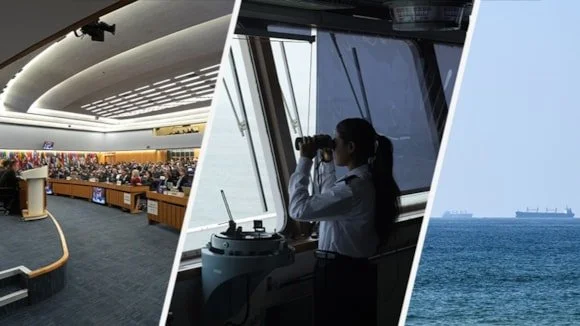
The Council of the IMO) has reaffirmed its commitment to protecting the safety, security, health and well-being of seafarers amid continuing threats to international shipping.
Meeting for its 138th session at IMO Headquarters in London (2–6 November 2026), the Council reiterated that vital shipping lanes should remain open, safe and secure. It underscored that seafarers must be protected wherever they are and whatever their nationality, including in geopolitical disputes over which they have no control.
Secretary-General Arsenio Dominguez emphasized:
“Seafarers continue to lose their lives, suffer serious injuries, face abandonment, are denied repatriation and are deprived of basic human necessities, including water, food and medical care, resulting from the ongoing geopolitical conflicts.”
He highlighted the death of another seafarer this week, following an attack on the M/T VELOS SAPPHIRE in the Strait of Hormuz on 5 November, bringing the number of confirmed casualties to 25 since the conflict in the Middle East began. In total, at least 130 attacks against commercial vessels in the region have been verified by IMO, with thousands of seafarers at risk, including those on ships that have been unable to leave the Persian Gulf.
The Council called on Member States to refrain from unlawful measures that would jeopardise the safety of seafarers and international shipping. The Secretary-General further committed to finding additional concrete measures IMO can take to help prevent further loss of life and alleviate the human cost of the crisis.
The Council strongly condemned attacks carried out by the Houthis against merchant and commercial vessels and their crews in the Red Sea and Bab al-Mandab Strait, as well as attacks by the Russian Federation against merchant vessels, seafarers, port infrastructure, search and rescue assets and other maritime safety services supporting the operation of Ukraine's special maritime corridor. It reiterated its commitment to the security and freedom of navigation in the Black Sea.
The Council noted the increase in piracy and armed robbery attacks in the Western Indian Ocean and Gulf of Aden region, including 17 instances of attempted and actual piracy and armed robbery at sea in this region alone since the start of the year. It noted the work underway to address these developments, within the framework of the Djibouti Code of Conduct and its Jeddah Amendment.
The Council requested the Secretary-General to continue monitoring maritime security developments in these various regions and to keep Member States informed.