
Gulftainer unveils global trade infrastructure strategy to build one of Middle East’s largest integrated logistics ecosystems
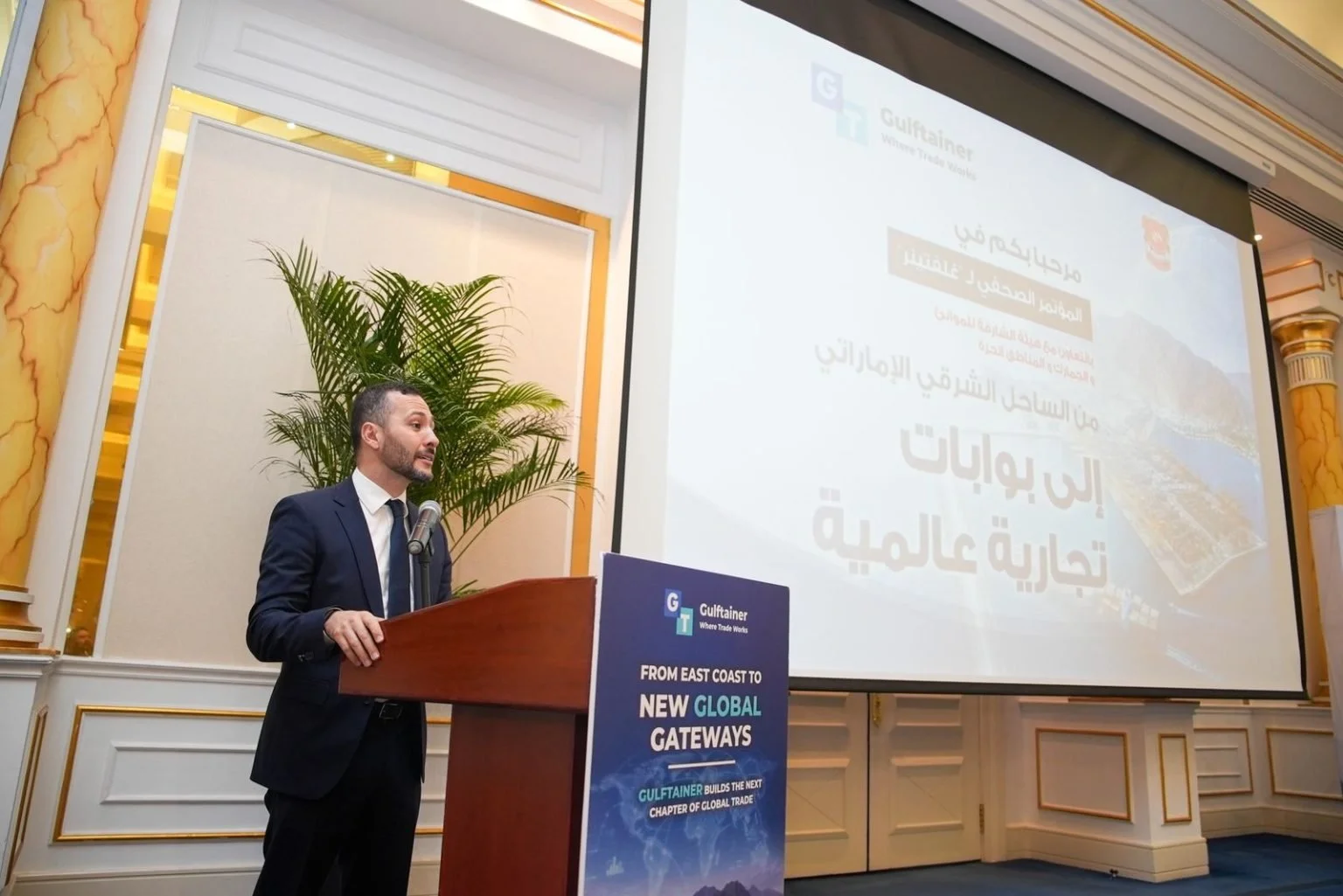
Sharjah, UAE-based Gulftainer yesterday announced what it called the most significant transformation in its nearly 50-year history, unveiling a bold new strategy to become a ‘global trade infrastructure company’. It will integrate ports, shipping, inland logistics, industrial ecosystems and AI-powered supply chains into a single connected platform serving some of the world’s fastest-growing trade corridors across the UAE, the Indian Subcontinent, China, East Africa and the GCC.
“This is more than an expansion of our business—it is the launch of a new chapter in Gulftainer’s history,” said Farid Belbouab, Group CEO of Gulftainer. “For nearly fifty years, Gulftainer connected ports. The next fifty years will be about connecting economies.”
From Sharjah, the company is building an integrated trade ecosystem that connects maritime gateways, logistics parks, shipping services, industrial infrastructure and intelligent digital platforms across the UAE, the Indian Subcontinent, China, East Africa and the GCC.
Gulftainer’s says its transformation is built around four integrated business platforms that together provide customers with a seamless, end-to-end supply chain offering:
GT Ports – World-class container terminals and maritime gateways
GT Logistics – Inland logistics, multimodal transport and supply chain solutions
GT Parks – Logistics parks, warehousing and industrial ecosystems
GT Maritime – Regional shipping services connecting strategic trade corridors
Together, Gulftainer says these platforms enable it to move beyond operating individual assets to delivering integrated trade infrastructure that connects production, transport, storage and distribution through a single customer experience.
At the centre of Gulftainer’s strategy is the continued expansion of Khorfakkan Commercial Terminal (KCT) from 3.5 million TEUs to 5 million TEUs, with a long-term masterplan exceeding 10 million TEUs. Future integration with Etihad Rail will further strengthen KCT as a fully multimodal gateway connecting sea, road and rail.
Complementing KCT are Al Dhaid Logistics Park and *Sajaa Logistics Park, which together will provide 2.3 million TEUs of annual inland logistics capacity.
Collectively, these developments are creating one of the Middle East’s largest integrated logistics ecosystems, combining warehousing, bonded and non-bonded storage, cold chain, contract logistics, container freight stations (CFS), distribution centres, e-commerce fulfilment, cross-docking, value-added logistics, light industrial activities and multimodal transport solutions within a single connected platform.
Together with GT Lines, which currently operates 10 chartered vessels and is expanding through owned vessels, Gulftainer is creating integrated trade corridors that seamlessly connect ports, shipping and inland logistics across the region.
Digital innovation is central to Gulftainer’s transformation. The company is developing an AI-powered platform integrating intelligent supply chain management, customer self-service, real-time cargo visibility, digital payments and one of the region’s first integrated logistics digital wallets, providing customers with greater visibility, efficiency and control across increasingly complex supply chains.
Building on what it calls its proven ability to maintain resilient cargo flows during recent regional disruptions and as global trade continues to evolve, Gulftainer says it is positioning itself at the intersection of infrastructure, connectivity and digital intelligence—helping businesses build more resilient supply chains while supporting the UAE’s ambition to become one of the world’s leading trade and logistics hubs.