
Columbia Group calls for greater focus on disability inclusion in maritime
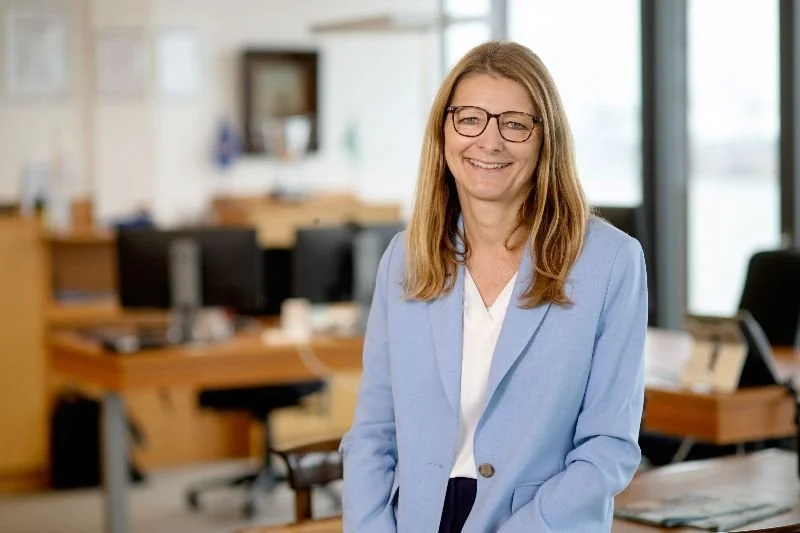
Columbia Group is urging the maritime industry to look more closely at how people with disabilities are assessed, supported and given access to opportunities across the sector.
While shipping has made progress on diversity and continues to embrace new technology, disability inclusion remains less developed than in many other industries. For Claudia Paschkewitz (pictured), Director of Sustainability, Diversity, and Inclusion at Columbia Group, this means looking beyond traditional assumptions about what people with disabilities can contribute, particularly in shore-based and technology-enabled roles.
She explained that, in some cases, barriers can arise automatically, rather than through a fuller assessment of what a person is actually able to do. These barriers can be reinforced by long-standing medical requirements, traditional views of maritime roles and limited awareness of how workplace adjustments, digital tools and assistive technology can widen access.
While safety-critical onboard roles must always be treated with appropriate care and rigour, many shore-based positions are not subject to the same operational constraints, meaning advances in digital tools, assistive technology and more flexible working practices could open up a wider range of opportunities. However, progress across the industry has been slow.
Ms Paschketwiz said: “There is a perception that maritime is already inclusive because of its global workforce, but in reality, that is not the full picture, particularly when it comes to disability. We need to look more carefully at where barriers still exist and whether they are genuinely linked to safety and performance, or whether they reflect assumptions about how maritime roles have traditionally been viewed.
“As new technologies continue to change the nature of maritime work, the industry has an opportunity to think differently about skills, capability and access to opportunity. One bias is assuming suitability for certain roles based on how things have traditionally been done. We need to break away from that. There is strength in diversity. Different people bring different strengths, and we will never be able to fully utilise those strengths if we do not first give them the opportunity to do so. If we want to challenge this, it must come from within the industry itself, starting with leadership and a focus on skills, fairness and giving everyone the opportunity to grow.”
Last year, Columbia Group announced the appointment of Christina Orfanidouas Head of AI to lead the Group’s AI implementation and strategy. She believes it is critical for DEI to be embedded into company culture and technology implementation, rather than treated as a separate initiative.
Ms Orfanidou said: “Technology, and AI in particular, can help us make better decisions for DEI by bringing more evidence into the process, prompting us to challenge assumptions and helping leaders see where barriers still exist. That is why building AI responsibly and inclusively has been part of our approach from day one. If we design for fairness upfront, we do not just comply. We widen opportunity and raise the bar for the whole industry.”