
Expanded IMO Data Collection System rules needs engine monitoring rethink, advises CMT
Shipowners and managers are being reminded to review onboard fuel-measurement and data-capture practices following the entry into force of amendments to MARPOL Annex VI.
All ships of 5,000gt and above engaged on international voyages must now begin collecting more detailed operational data under the IMO Data Collection System. This includes information on how much fuel is used by different onboard systems, alongside information on distances sailed and time underway to allow fuel consumption to be assessed against the work the ship performs.
While the official entry into force date was August 1, 2025, data collection is based on a full calendar year.
“Although information using the enhanced dataset does not have to be submitted until early 2027, the obligation to generate compliant data starts now,” said Uwe Krüger, Joint Managing Director of Germany’s CM Technologies (CMT). “Separating data collection from reporting is essential, as information that is not captured onboard during 2026 cannot be produced later.”
The amendment, adopted at MEPC 81 in March 2024, does not change the established IMO DCS reporting cycle. Fuel-oil consumption data for a given calendar year must still be verified by the Flag State or a recognised organisation, typically a classification society, with a Statement of Compliance issued by 31 May of the following year. What has changed is the scope, structure and traceability of the data that must now exist to support that process.
“Ships are now required to collect more granular information than under the original 2016 framework, moving beyond aggregated fuel figures towards continuous measurement that can demonstrate how fuel is consumed across different onboard systems and operating conditions. For many fleets, this represents a practical shift from estimation and reconciliation towards direct measurement,” said Krüger.
According to CMT, a common source of uncertainty is the assumption that the expanded DCS can be addressed primarily through revised reporting procedures, rather than through changes to how operational data is generated onboard. “It is important for shipowners to understand that expanded IMO DCS separates when data is collected from when it is reported,” said Fuhlbrügge. “The first reports will be submitted in 2027, but the quality of those submissions depends entirely on what is measured and logged onboard throughout 2026, and the quality of that data.”
He added that ensuring the right tools are in place early reduces both compliance risk and verification effort later. “If fuel consumption by consumer and operating data are being generated continuously, owners place themselves in a much stronger position when the data is audited and reviewed.
"The expanded DCS places greater emphasis on how data is generated, making onboard monitoring capability a compliance issue rather than an optimisation choice. Continuous measurement of fuel consumption by consumer, supported by engine performance data, gives owners a far stronger audit trail,” he said.
“Effective monitoring reduces reliance on estimation and reconciliation and puts operators in a much better position when the data is verified, since incomplete or inconsistent datasets can result in a SoC being withheld. There could also be greater interest during port State control inspections, and increased scrutiny from charterers.”
Krüger furthered that many operators still associate DCS with end-of-year paperwork, “but it is now very much an operational issue. It depends on what happens in the engine room and on the bridge every day, not on how figures are assembled twelve months later.”
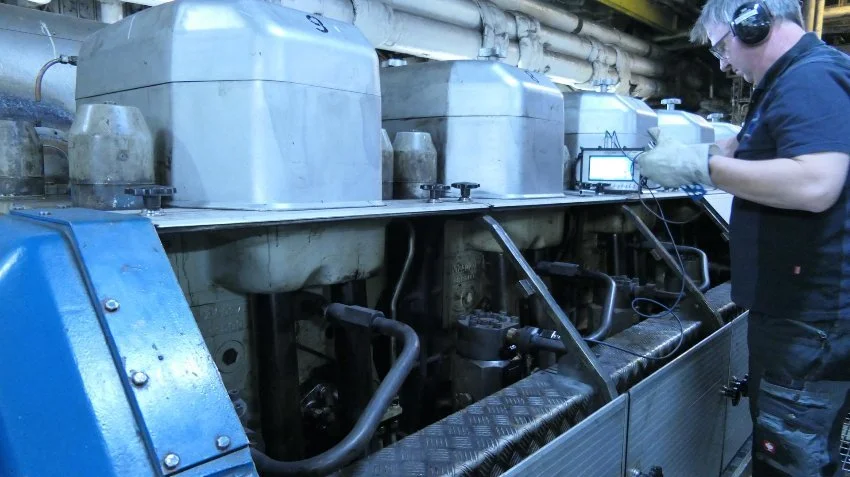
CMT says its engine-performance and fuel-monitoring systems are designed to align with how the expanded IMO DCS dataset must be generated in practice. By capturing fuel consumption at the level of individual engines and other consumers, and linking that data to operating conditions, such systems provide a structured, auditable foundation that supports expanded DCS requirements alongside existing regulatory schemes.
“The objective is not simply to report more data, but to create reliable data in the first place,” Krüger said. “Operators that focus on measurement and data integrity will find their 2027 submission processes far more straightforward. Frequent and effective engine monitoring and data capture also helps crews optimise reduce fuel consumption, emissions and costs.”
With expanded IMO DCS data collection now underway, CMT is advising shipowners and technical managers to treat 2026 as a preparation and validation year, ensuring that onboard systems, procedures and verification pathways are aligned well in advance of the first submissions under the enhanced framework.