
Inmarsat Maritime unveils next phase of Nexus evolution with ViaSat-3 network
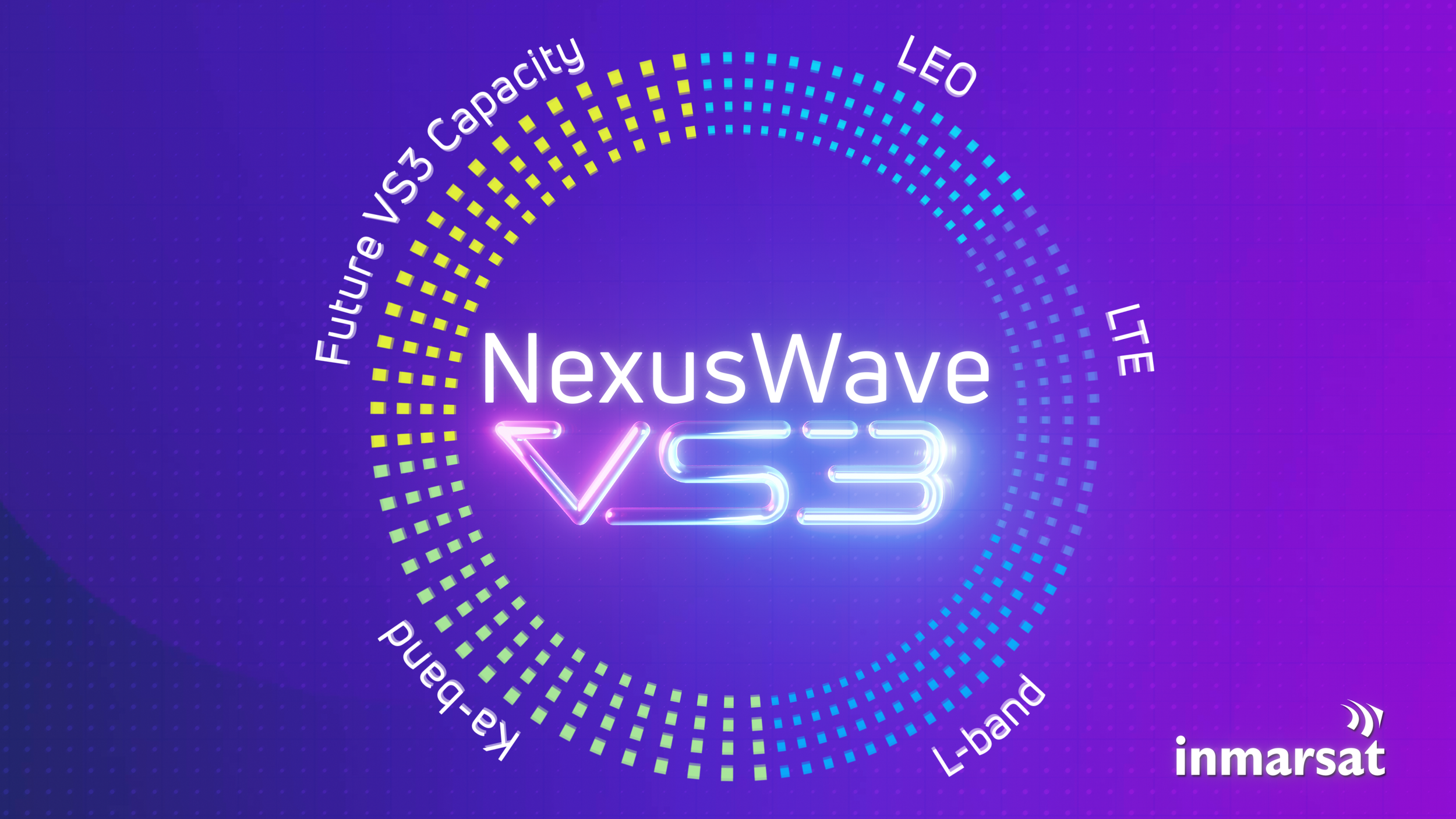
he upcoming entry into service of ViaSat-3 satellites together with new purpose-built VS60 maritime terminal are expected to deliver a significant capacity increase to NexusWave customers.
Inmarsat Maritime, a ViaSat (NASDAQ: VSAT) company, has unveiled the next phase in the evolution of its NexusWave bonded connectivity service, following the successful launch of the ViaSat-3 Flight 2 satellite and in anticipation of the launch of the ViaSat-3 Flight 3 satellite.
As the two ViaSat-3 satellites are scheduled to enter service in 2026, NexusWave customers will benefit from a dramatic increase in available bandwidth via a new generation of maritime terminal, with additional capacity expected from VS3 Flight 2 over the Americas and VS3 Flight 3 over Asia-Pacific. This means that by investing in NexusWave today, maritime customers can expect a major step forward in performance, more consistent speeds, and even better flexibility to meet their evolving needs.
NexusWave is Inmarsat’s fully managed, bonded multi-network service combining capacity from GEO Ka-band, LEO, LTE, and L-band networks in a single intelligent connectivity solution. With the introduction of the ultra-high-capacity, high-speed ViaSat-3 satellites, customers will enjoy faster data transfers and improved network efficiency to support digitalisation and crew welfare at scale for a truly ‘office-like’ and ‘home-like’ onboard internet experience.
The new VS60 maritime terminal, engineered by Intellian and powered by Viasat software defined radio technology, will further strengthen NexusWave architecture and support bandwidth-intensive applications, such as enterprise networking, video streaming, crew welfare, and mission-critical operations. During recent sea trials, the VS60 terminal, purpose built for the ViaSat-3 era, achieved download speeds exceeding 250 megabits per second. The VS60 terminal also incorporates multiple layers of protection to safeguard sensitive data and ensure operational integrity.
In addition, ViaSat-3 satellites feature more than 1,000 steerable spot beams, which are designed to allow bandwidth to be moved dynamically to match demand across global shipping lanes, ports, and offshore locations.
Gert-Jan Panken, Vice President, Inmarsat Maritime, said: “The combination of NexusWave’s bonded, multi-orbit architecture, and the new ViaSat-3-ready terminal developed with Intellian puts us in a strong position to support the operational priorities of global fleets. It reinforces our long-term commitment to reliability, security, and customer experience at sea, and enables fleets to scale seamlessly with future capacity as the network expands.”
Ben Palmer OBE, President, Viasat Commercial, added: “NexusWave was built to deliver consistent performance in an increasingly complex connectivity landscape. As ViaSat-3 capacity becomes available, we’re taking another big step forward for our customers and partners by bringing more bandwidth, better flexibility, and a forward-thinking upgrade path to ensure connected confidence for the future.”