
Fully electric ferry enters into service on the Thames
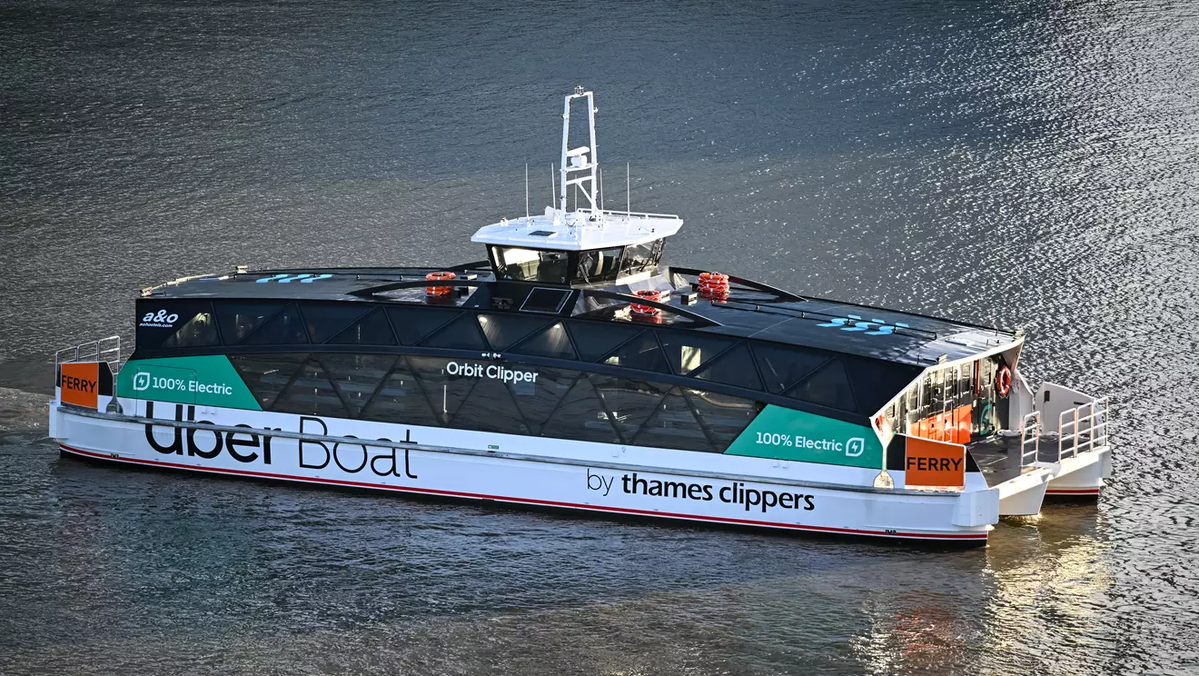
The UK’s first fully electric zero-emissions ferry, ’Orbit Clipper’, has completed its first passenger trip across the River Thames, ushering in a new era for sustainable transport in London.
The ferry, owned and operated by Uber Boat by Thames Clippers developed with part funding from the Department for Transport and Innovate UK, was built in conjunction with project partners including high-speed aluminium ship builder, Wight Shipyard Company; maritime civil engineering consultants, Beckett Rankine; and electric infrastructure specialists, Aqua superPower. Orbit Clipper will operate between Rotherhithe on the south of the river and Canary Wharf on the northern side with zero tailpipe emissions, providing an accessible, fast and green service for thousands of Londoners and visitors a day.
A ceremony to mark the launch of the unique vessel was held last Friday (5 December), with the Mayor of London, Sadiq Khan, among attendees. He was joined by local leaders, partners and stakeholders who gathered to commemorate Orbit Clipper’s first passenger outing.
Orbit Clipper enters operation in tandem with the current vessel, Twinstar to ensure service continuity. The vessel will be progressively phased into operation, with full operation and exclusivity of the route targeted for Spring 2026. Once fully operational, the 150-passenger boat, with capacity for 100 bicycles, will cross the river every 10 minutes from each side on weekdays and every 15 minutes on weekends.
The vessel is part of Uber Boat by Thames Clippers' broader sustainable innovation initiative. The company has a modern fleet featuring three hybrid high-speed ferries: Earth Clipper, Celestial Clipper, and Mars Clipper. Operating on battery power in Central London, the hybrid vessels recharge while continuing their journey outside of this zone.
Adding Orbit Clipper to the fleet underlines the Uber Boat by Thames Clippers’ commitment to creating green transport solutions for London’s commuters and leisure travellers. The project is a significant step towards the River Bus’ ambitious target of reducing carbon emissions by 50% by 2035 and achieving net-zero by 2050.