
LR study points to 200,000m³ LNG carriers as viable next step for global LNG fleet renewal
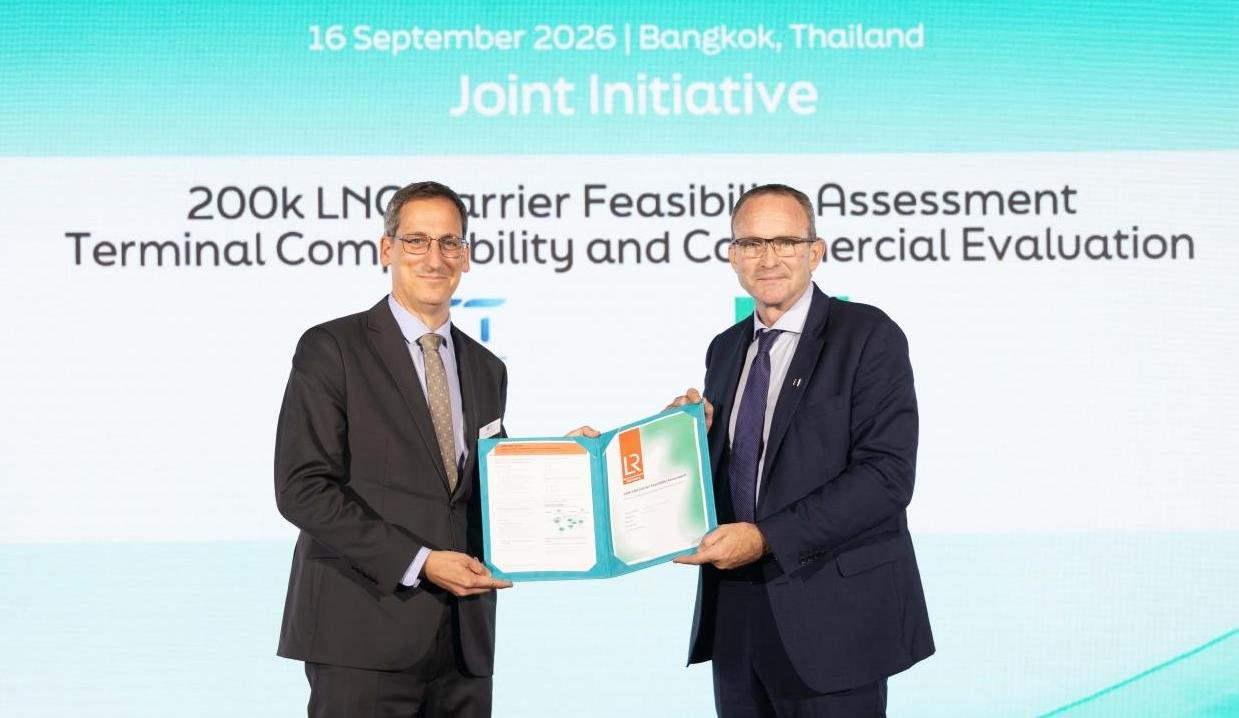
Lloyd’s Register (LR) has identified 200,000m³ LNG carriers as a credible next step for global LNG fleet renewal, with new analysis showing that larger vessels could increase cargo capacity and reduce transportation costs without requiring major disruption to existing terminal infrastructure.
The findings, published in LR Advisory’s terminal compatibility and commercial evaluation report for GTT that was presented at Gastech 2026 last week (pictured), assessed representative 200,000m³ LNG carrier designs against existing global LNG infrastructure and modelled their commercial performance across Atlantic and Pacific trading routes.
The analysis found that 88 LNG terminals worldwide are compatible with 200,000m³ LNG carrier concepts, compared with 97 terminals for a conventional 174,000m³ vessel. Crucially, the accessible network still includes many of the world’s major LNG trading hubs, indicating that larger vessels could be deployed across core trades with only a limited reduction in terminal reach.
The research found that modern LNG infrastructure across Asia Pacific, Europe, North America and the Middle East is generally well positioned to accommodate 200,000m³ LNG carrier operations.
One of the report's key findings is that cargo tank configuration has little influence on terminal accessibility. No material difference was identified between three-tank and four-tank concepts. Instead, vessel beam was found to be the most important factor in determining compatibility, alongside draft and displacement.
The findings come as LNG shipping faces pressure to improve transport efficiency while preserving operational flexibility. LR’s research suggests that increasing vessel size could help owners and charterers move more cargo per voyage, reduce the number of sailings required for a given transport volume and support future LNG trade growth.
Alongside the technical assessment, LR's commercial evaluation identified benefits for both owners and charterers. Despite the modest reduction in terminal accessibility, the larger vessel provides meaningful economic advantages through increased cargo carrying capacity and improved transportation efficiency.
LR’s modelling points to a potential owner benefit of approximately US$85.5 million over 30 years, alongside material transport savings on representative routes. The report notes that larger vessel concepts may become increasingly relevant as LNG carriers operate at lower average speeds and as owners seek to balance transportation efficiency, fleet renewal and long-term operational flexibility.
Study co-author Sujith Tooneri, Global Head – Newbuild Advisory Services, LR, said: “The industry is entering a period where fleet renewal decisions will shape LNG transportation for decades to come. Our analysis shows that 200,000m³ LNG carriers can retain access to most major LNG terminals while increasing cargo carrying capacity, making them a practical option for owners looking to improve transportation efficiency and support future trade growth.”
Constantinos Chaelis, Global Gas Segment Director, LR, said: “The significance of these findings is that larger LNG carriers do not appear to require a wholesale rethink of terminal infrastructure. Many key LNG hubs are already capable of supporting these vessel concepts, which gives the market a realistic pathway to improve transport efficiency while maintaining broad trading optionality.”