
Marine insurance supply remains stable despite changes in global trade, says IUMI President
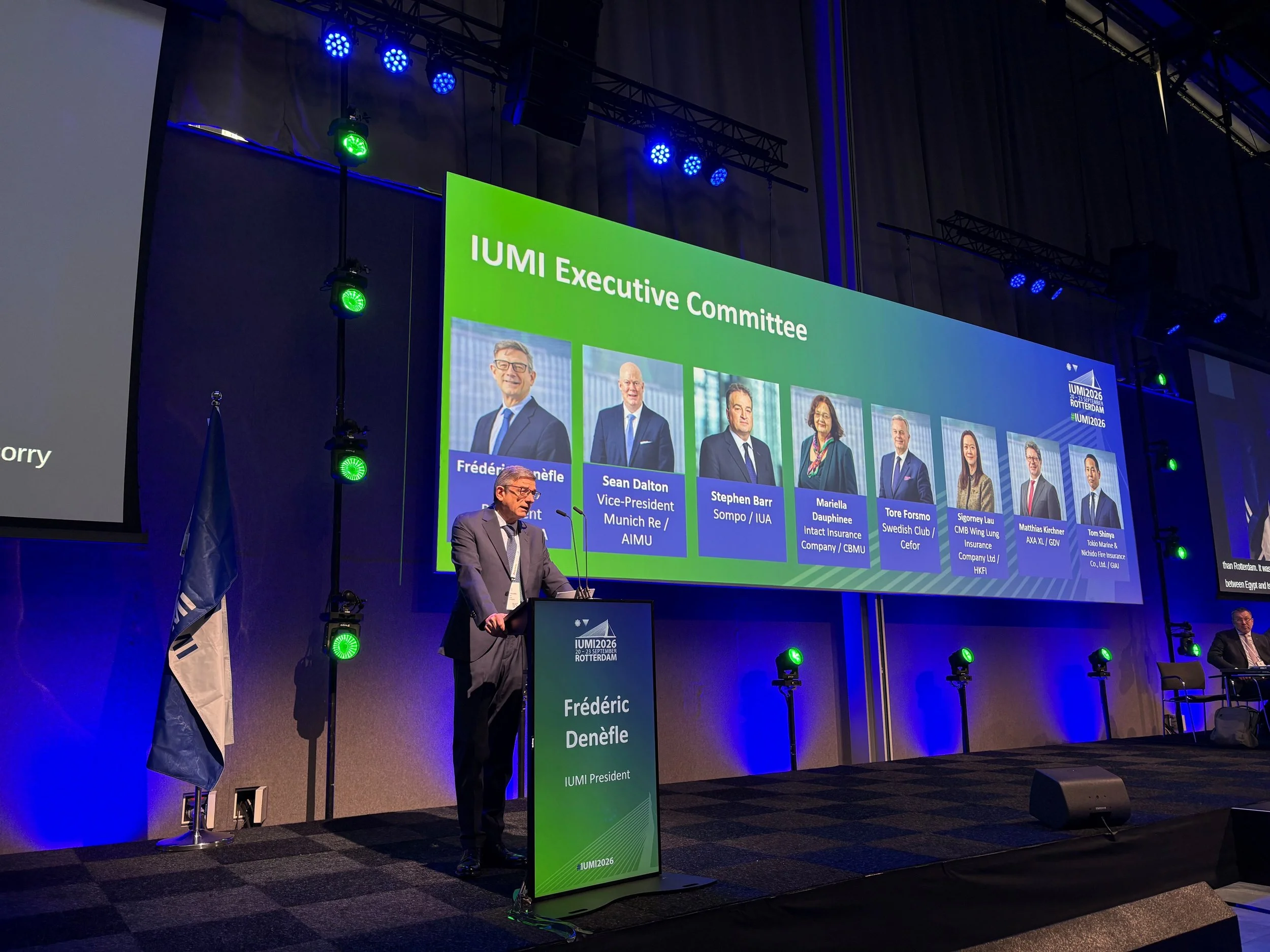
The global marine insurance market remains in a stable position, with premium growth strongly supported by a weak USD in hull and cargo. Meanwhile the sector is entering a period of significant change driven by geopolitics, new trade routes, digitalisation and the transition to a lower-carbon shipping industry.
Opening the International Union of Marine Insurance (IUMI) annual conference in Rotterdam, IUMI President Frédéric Denèfle said that while the overall market was performing well, insurers needed to remain alert to the forces reshaping global trade and the risks they bring.
“The hull and cargo markets have shown growth in terms of premium income, although the offshore energy sector remains relatively subdued,” said Denèfle. “US trade tariffs haven’t caused the disruptions we feared, and the world economy was more resilient than anticipated. But there is considerable uncertainty from increasing war risks, additional capacity bringing greater competition and continued inflationary pressure. This is coupled with ongoing uncertainty around free trade and global commerce.”
Despite these challenges, Denèfle highlighted the ability of marine insurers to continue providing cover in all of the world’s higher-risk regions. He said the changing geopolitical landscape was also likely to influence the future shape of global trade and, consequently, the risks that marine insurers will be asked to cover.
“As insurers, we must be prepared to insure tomorrow’s trades and trade routes, including those being introduced to avoid areas of tension and conflict,” he said. “We also need to understand the new markets that will inevitably emerge as a result of geopolitical developments.”
Denèfle also stressed that marine insurers had an important role to play in supporting the decarbonisation of shipping. “Insurers must take a leading position on the decarbonisation of shipping, despite the hiccups we have experienced so far on this journey,” he said.
Technology is another area where Denèfle expects significant change. The rapid development of data standards, digitalisation and artificial intelligence is already beginning to influence how marine insurance operates.
“I see a day, not too far in the future, when our sector will be able to offer fully digitised and standardised global cargo insurance certificates that meet the requirements of financial institutions and our customers,” he said.
Artificial intelligence will also have a growing impact on the sector, he added. “AI is going to change how we operate. It will make us smarter and more efficient, and we will need to embrace and adopt this new technology wholeheartedly.”
While the pace of change is considerable, Denèfle said the marine insurance sector was well placed to respond. “Despite all this change, our sector remains strong, agile and ready to adapt.”