
Strait of Hormuz briefing covers vessel intelligence, insurance market response and charterparty implications
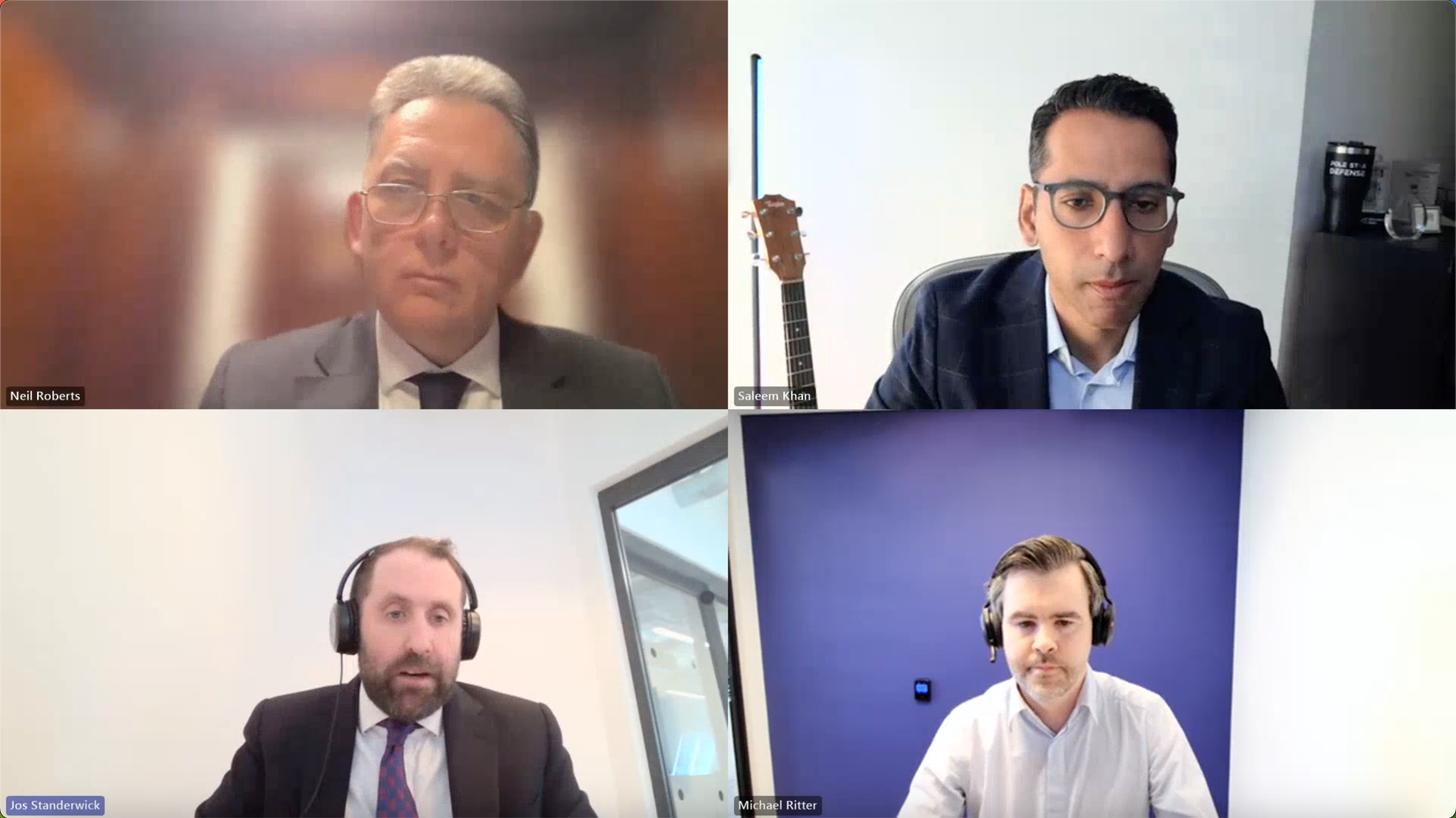
An eagerly anticipated webinar held yesterday by UK professional services’ body Maritime London, titled ‘Strait of Hormuz Briefing – Vessel Intelligence, Charterparty Implications, War Risks Market Response’, attracted more than 600 online registrations.
Moderator Jos Standerwick (pictured, bottom left), Lead Consultant, Maritime London & Head of Membership, Baltic Exchange, introduced the presentations by saying some of the “complexities” of the shipping situation in the Strait of Hormuz and Middle East Gulf had been “misrepresented” in the media. Most notably the erroneous suggestion that ships were not traversing the Strait because of lack of insurance cover, whereas in fact the ‘primary concern” of shipowners and operators in not doing so is the safety of seafarers. In keeping with these industry concerns, charitable donations to The Seafarers’ Society were invited from online attendees, with all monies collected to go to seafarers.
Saleem Khan (top right), Chief Data & Analytics Officer, Pole Star Global, began by informing that some 2,500 vessels are trapped in the Gulf area, with around 20,000 individual seafarers affected. There has been an almost total cessation of shipping activities in the region, he continued, with just “a few vessels’ traversing the Strait and then bound for countries like India and China unconnected with the conflict.
Aspects of the situations he highlighted included navigational tracking anomalies - such as the switching off of Automatic Identification Systems (AIS) by ships not wishing to become ‘sitting ducks’, AIS jamming, and ‘spoofing’ of locations, e.g. by Iran’s ‘dark’ fleet, all of these further heightening environmental risk in the area. In total, there had been 23 confirmed attacks on vessels since hostilities began on February 28, he said, plus three more reported by the Islamic Revolutionary Guard Corps that were unconfirmed. Twelve seafarers on commercial vessels had died, plus three were still missing.
Neil Roberts (top left), Head of Marine and Aviation, Lloyd's Market Association (LMA), lamented that there had been “a lot of inaccurate reporting” in the mainstream media on insurance matters. “Insurance is in place and available,” he stated, especially in terms of P&I insurance where “International Group cover is not cancellable”.
Roberts agreed with previous speakers that “the main reason” for ships not transiting the Strait was the safety issue, not any absence of insurance cover. And talk of a new US $20bn reinsurance fund was linked to the availability of naval escorts, he added, but for the moment both proposals remained “quite scant on detail”.
Roberts conceded that there had been a sharp rise in the cost of War Risk premiums but this only reflected what he called the “material change in risk profile”.
Michael Ritter (bottom right) , casualty lawyer and Partner at HFW, said the legal aspects of the situation were in many ways similar to that with the Houthi attacks that began in the Red Sea area over two years ago, except that this time the novel element was there being no ‘alternative route’ – such as round the Cape rather than through Suez – available to access the Gulf.
As regards possible charterparty disputes, most people would agree that it was a “legitimate decision” for ship masters not to proceed to ports in the area immediately surrounding the Strait of Hormuz, he said, but that such a decision became more debatable as distances from the Gulf increased. Recent attacks in the Gulf of Oman - including at the Port of Fujairah, as well as yesterday’s report of a strike on an LPG carrier off Oman – suggested that this was indeed a War Risk area, he opined, but Yanbu Port in the Red Sea – to where Saudi Arabia is diverting oil supplies via its overland pipeline – at present remains safe to load. If the current situation persists for several weeks, however, the legal concept of ‘frustration’ and its consequences may apply, he added.