
Stream Marine Training warns crew readiness must keep pace with future-fuel shift
As the maritime industry works toward the IMO’s 2050 emission-reduction targets, Stream Marine Training (SMT) is calling for seafarer training to keep up with the growing adoption of future fuels. Although frameworks for future fuels are developing, the STCW Convention does not yet mandate specific training for methanol, ammonia or hydrogen, leaving a clear regulatory gap.
While LNG remains the main alternative fuel in operation today, industry focus is increasingly shifting toward methanol, ammonia and hydrogen as longer-term decarbonisation solutions. Recent DNV figures show alternative-fuelled newbuilds now account for 11% of global orders, with LNG continuing to lead and methanol gaining momentum.
Methanol is also leading current retrofit activity. Five container ships have already been converted, with a further 28 conversion orders in place. Ammonia remains at an earlier stage, with uptake currently limited to a small number of offshore support vessels and tugs as pilot projects begin to emerge.
Methanol’s growth in retrofits reflects its more practical conversion pathway, requiring less complex engine, fuel-system and storage modifications than ammonia or hydrogen. Its bunkering network is also developing more quickly, with 19 methanol bunker vessels currently in operation and 13 more on order.
SMT says this shift makes crew competency an increasingly important part of safe fuel adoption.
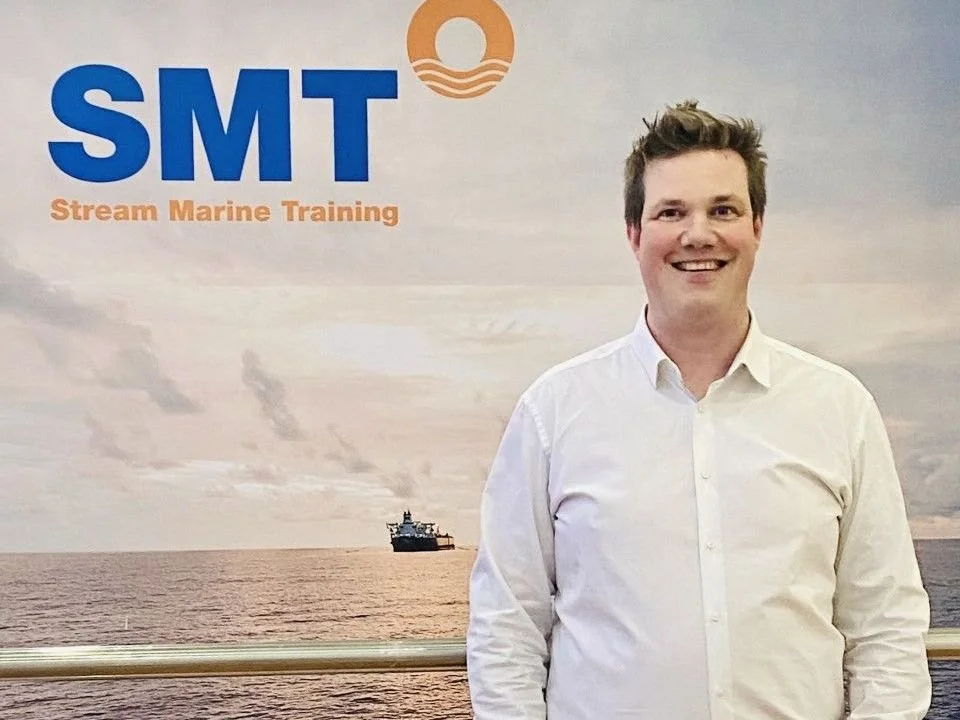
“Future fuels are moving closer to operational reality, and training must keep pace,” says Martin White, CEO, Stream Marine Training. “As new technologies are introduced, it is essential that seafarers have the understanding and confidence required to operate with these fuels safely and effectively on board.”
To support the sector during this transition, SMT offers familiarisation courses designed to provide the core information and operational fundamentals needed to strengthen and reinforce the IGF Code knowledge required for safe operations involving new fuel technologies.
For further details, please contact: technical@streammarinetraining.com