
‘Two Weeks, No Guarantees’: What the fragile Hormuz ceasefire means for shipping
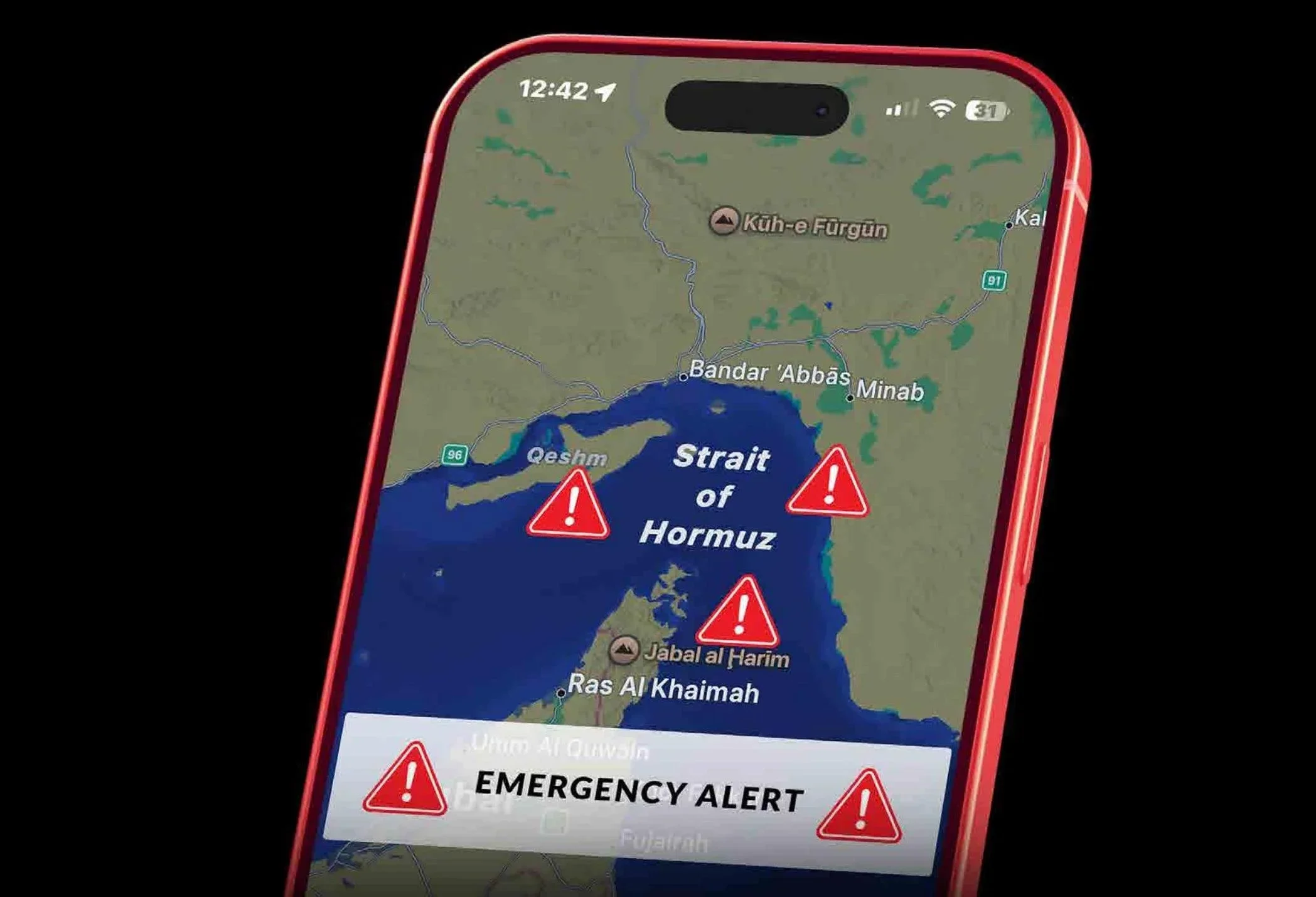
Iran’s threat to “target and destroy” ships transiting the Strait of Hormuz without permission has turned what looked like a two‑week breathing space into a highly unstable experiment, write Saleem Khan, Chief Data & Analytics Officer, Pole Star Global, and Arsenio Longo, Founder of HUAX. Below is their analysis, which they resume as showing that for shipping 'the questions haven’t changed but the answers just became sharper.'
"At the moment, the JMIC (Joint Maritime Information Committee) threat level for Hormuz remains CRITICAL, with no new UKMTO‑confirmed (UK Maritime Trade Organization) incidents. There are over 800 vessels that remain stranded in and around the Gulf. Strikes continued against Israel and Gulf states in the hours after the ceasefire announcement; Israel has now launched heavy attacks on Lebanon, and Tehran is openly questioning whether the deal still stands.
Against that backdrop, three questions matter.
1) Does traffic actually come back through Hormuz?
Some operators will still look for narrow windows to move, but the bar has risen again. As of the ceasefire announcement on 8PM EST on Tuesday, April 7th, we did see a slight uptick in traffic destined for “Hormuz”. As of this writing on April 9th, we did see 2 oil tankers (one Iranian and the other Palau-flagged) leave the Strait unharmed. We have not seen a single oil tanker transit the Strait on April 7th or 8th.
Any attempt to transit now has to account for:
• Iran’s explicit warning that uncoordinated ships may be targeted
• An unclear coordination mechanism with Iran’s armed forces
• A backlog of hundreds of vessels already waiting
Expect only very limited, highly curated movements, if any, by ships judged least politically exposed. There will be no orderly surge back to 120+ daily transits; most owners will remain at anchor or route away until there is demonstrable, enforced restraint at the Strait.
We may see the odd hull move, but nothing that looks remotely like a return to normal flows.
The real-time traffic picture points in the same direction. Deduplicated live vessel positions across the Strait reveal a pattern heavily skewed toward waiting and stationary ships rather than active movement. Broad-based commercial flow is not fully frozen, but it is visibly thinned, highly selective, and operating under extreme caution.
2) Does Iran actually relax control at the Strait?
The answer, for now, is no. Iran’s messaging re-emphasises control, not relaxation.
The IRGC’s discretionary passage regime, including the Larak Island route, was already opaque. Layered on top of that is:
• A requirement for prior coordination and permission
• The threat that non‑compliant ships could be “targeted and destroyed”
• An ambiguously defined role for “Iran’s Armed Forces” at a time of disrupted IRGC command
For many ship captains, that does not feel like safe passage; it feels like operating inside someone else’s rules of engagement.
In other words, the Strait may be more open on paper, but it is very unlikely to feel open for every ship and every flag.
AIS signalling adds a further layer to that picture. Beyond the thin traffic flow itself, we are also seeing vessels repurpose the AIS destination field as a signaling surface; not for conventional port destinations, but for sovereign identity, security posture, or political disassociation. That does not by itself prove a formal exemption mechanism. But it does suggest that passage behaviour in and around Hormuz may be becoming more conditional, more adaptive, and in some cases more politically coded than normal commercial shipping practice would imply.
3) What happens if there is a breach or a miscalculation?
We are already close to that line. Continued strikes after the ceasefire announcement and Israel’s escalation in Lebanon have created real ambiguity about who considers what to be in bounds.
A single incident could:
• Collapse confidence in hours: a missile near a convoy, a drone overflight, a hostile close approach to a tanker
• Push operators back to full avoidance of Hormuz and, for some, the Red Sea
• Lock in Cape of Good Hope routing as the working default, not the contingency
This two‑week pause still buys time, but it now looks less like a window of opportunity and more like a very narrow operating corridor, with the walls closing in."